While the main gallery showcases my final captures of the August 12, 2026 total solar eclipse, an eclipse expedition of this scale is shaped just as much by the miles I covered on the road, the historical landscapes I explored, and months of logistical preparation.
1. Selecting the Eclipse Location
Pinpointing the ideal vantage point for the August 12, 2026 total solar eclipse was a months-long exercise in precision, but executing it required flexibility. For the longest time, my expedition was firmly targeted on the rugged northwest coast of Spain—specifically scouting locations along the dramatic cliffs of the Costa da Morte, Fisterra, and A Coruña. The plan was to capture the low-setting sun dipping directly into the Atlantic Ocean at Cabo Ortegal.
However, as expedition week drew closer, intense real-time weather monitoring and regional reports threw a wrench into those coastal plans. Cross-referencing micro-meteorological data via Eclipsophile.com and shadow modeling from Xjubier.com revealed a stubborn threat of heavy marine layer cloud cover rolling in off the Atlantic right at sunset. Compounding that anxiety, severe wildfires began breaking out across parts of Spain, threatening visibility, air quality, and access routes.
Knowing that a multi-camera mobile observatory cannot afford a clouded horizon or evacuation detours, I made a decisive pivot a few months prior to the eclipse date. I abandoned the Atlantic coast entirely and shifted focus inland to the high-plateau region of Soria in Castile and León. It proved to be the ultimate game-time decision. Abejar and its surrounding elevated terrain offered the ideal high-altitude clarity, stable atmospheric conditions, and an unobstructed West-Northwest view for the low 10-degree sunset totality window—turning a potential weather washout into an unforgettable success.
2. Packing and Gear Logistics
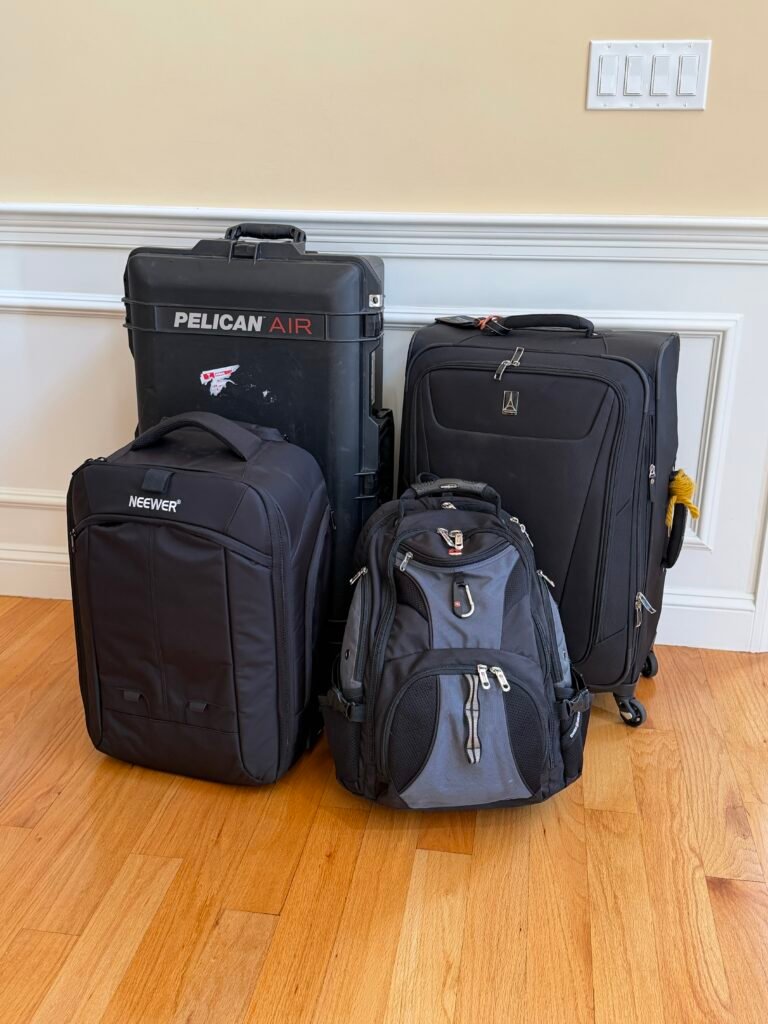
Executing a multi-camera eclipse expedition internationally requires military-grade organization when it comes to aviation gear transport. Here is how I packed down my entire mobile observatory:
Neewer Camera Carry-On Bag
This served as the safe transport vault for my complete array of camera lenses, ensuring my optics stayed fully protected in the overhead cabin.
Swissgear Backpack
Loaded down with computational power and critical electronics, this bag carried four Microsoft Surface Pro tablets, a dedicated laptop for system management, and four TalentCell batteries to power field operations.
Pelican 1615 Air Case
The heavy-duty backbone of the equipment transit. This spacious case swallowed my ZWO tracking mounts, robust tripods, and vital mechanical hardware securely for the transatlantic flight.
Travelpro Maxlite 28-Inch Checked Bag
Utilized for a few auxiliary hardware components and all my expedition
3. Madrid & Segovia: Urban Staging and Roman Engineering
Madrid Arrival & delayed Luggage: Landing in Madrid via a direct Iberia flight from Boston, my first day took an unexpected turn when I realized my checked bags had been left behind in Boston to arrive the next day, turning my initial afternoon into a quick shopping trip for basic essentials.
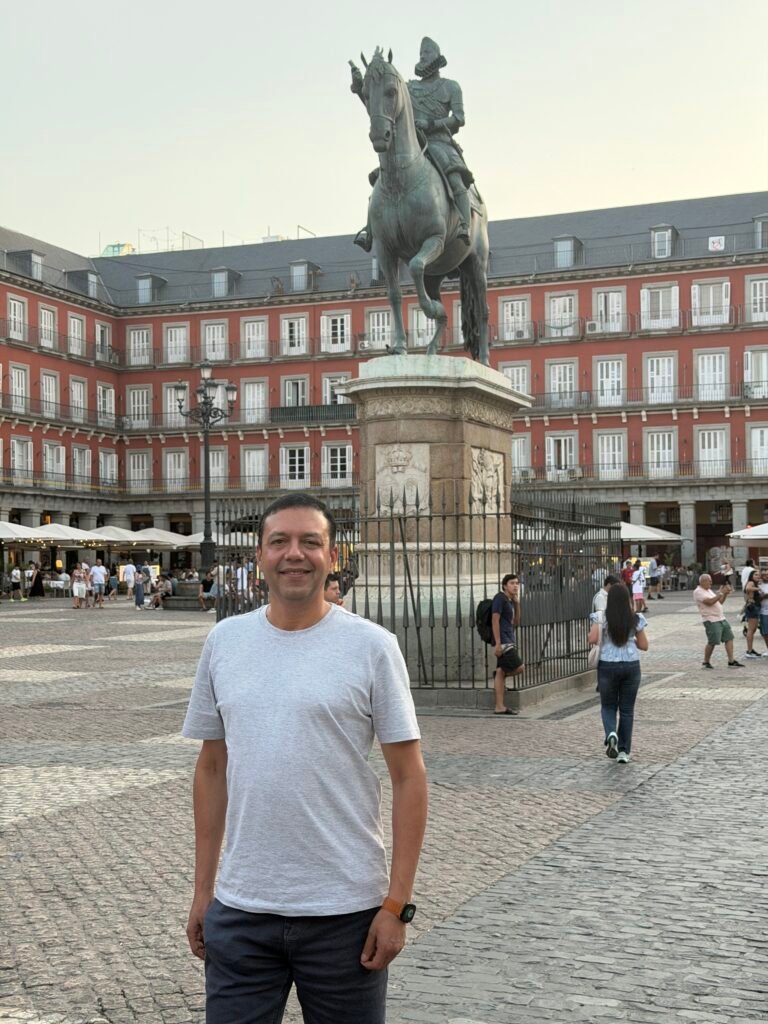
Plaza Mayor Penthouse: I took an Uber directly to my booked penthouse in Plaza Mayor, a stunning pedestrian-only square featuring the monumental bronze statue of King Philip III in the center and surrounded by over 20 restaurants offering incredible local tapas and dining options.
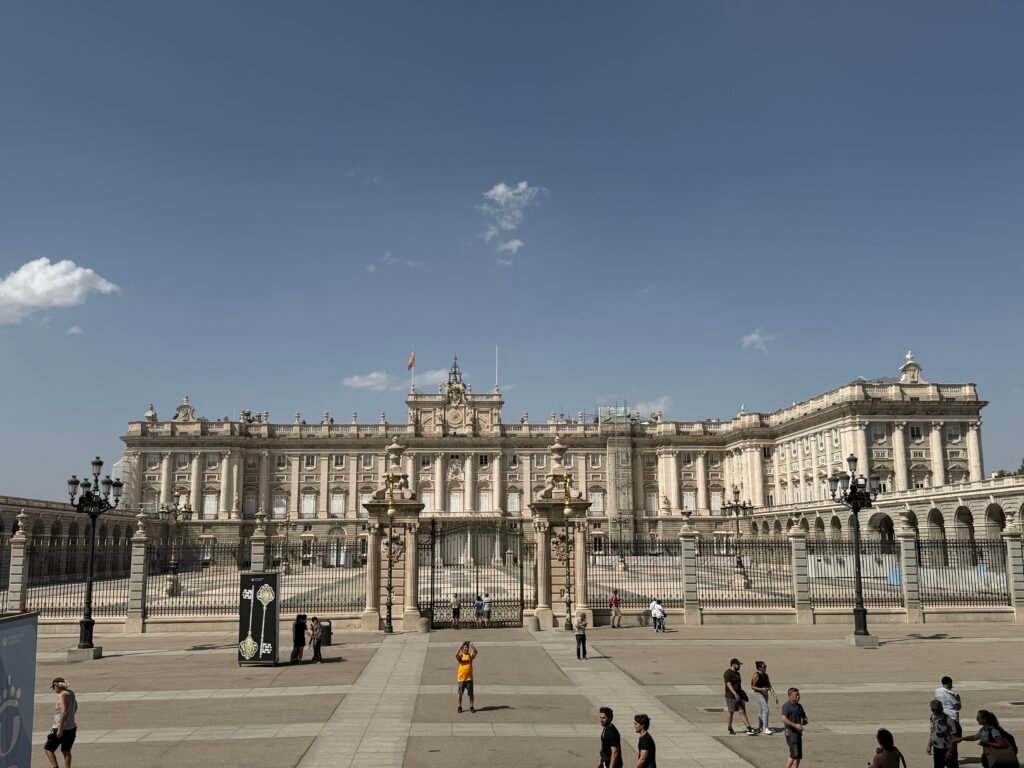
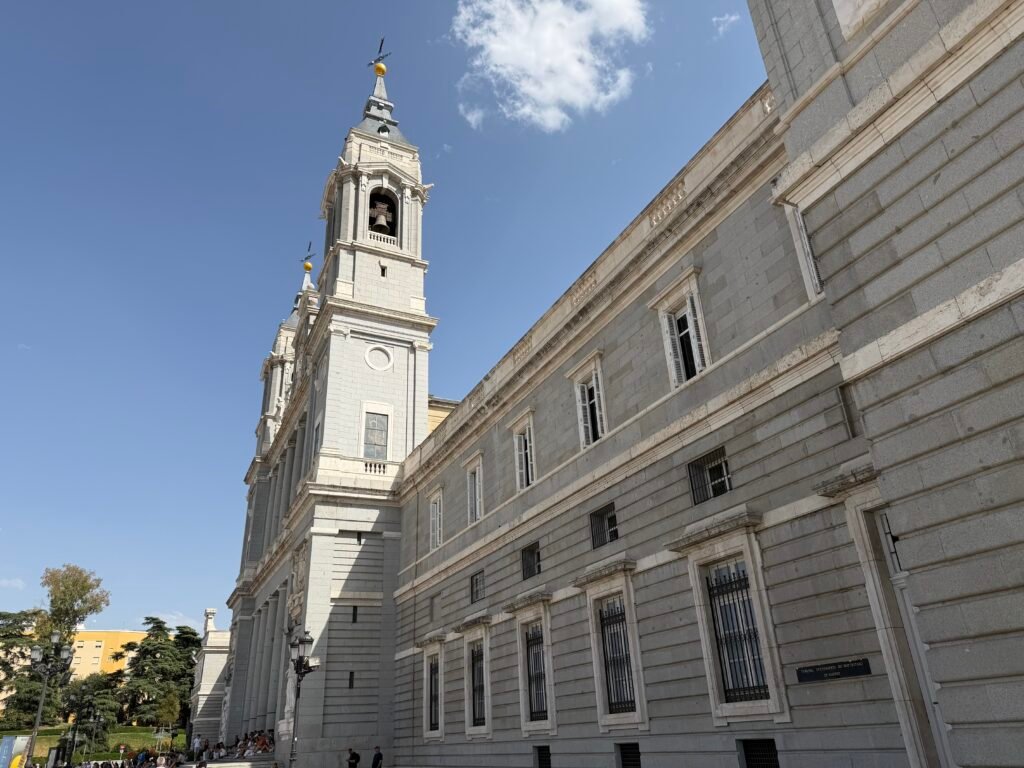
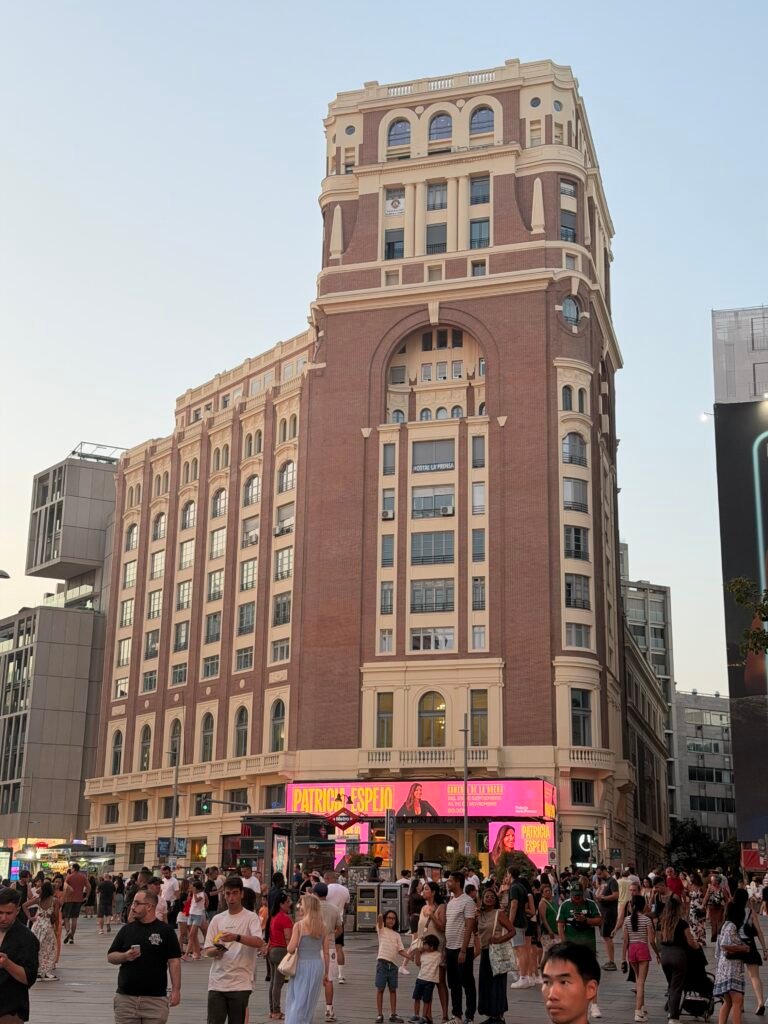
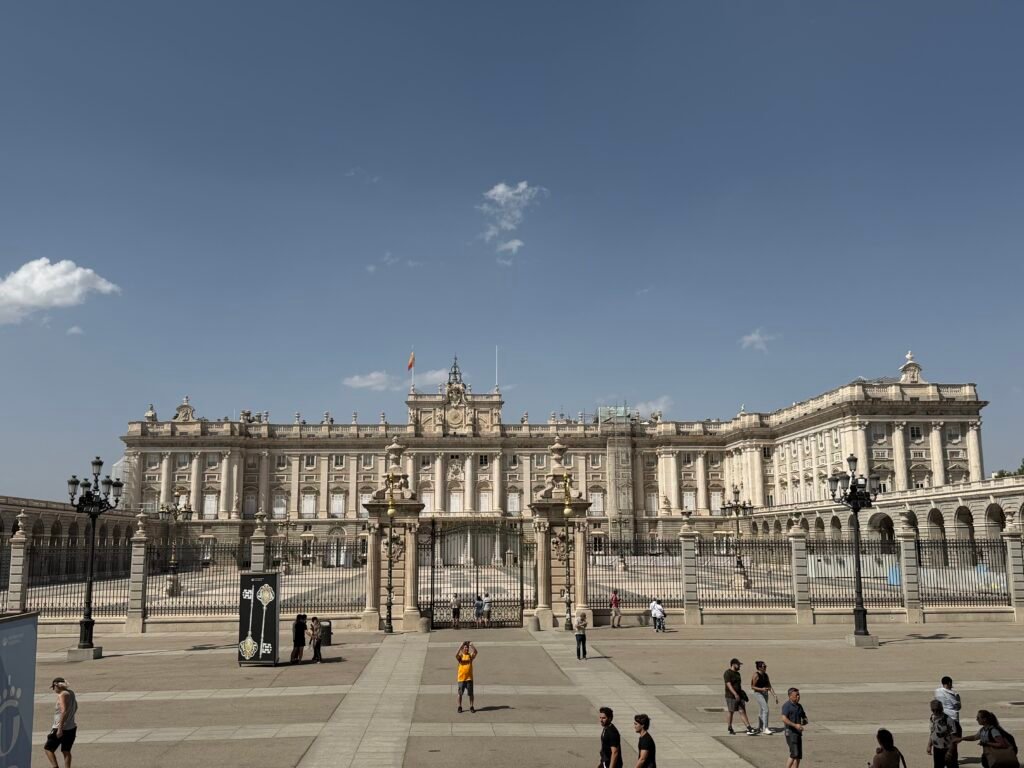
City Exploration & Architecture: Between waiting for my gear, I explored the city on foot, taking in the magnificent scale of the Royal Palace of Madrid (Palacio Real), the adjacent Almudena Cathedral, and the vibrant historic corridors of the Mercado de San Miguel.
The Mercedes-Benz Vito Tourer: Knowing the headaches of parking a large vehicle in narrow Madrid streets, I intentionally waited until my third day to take an Uber back to the airport depot to collect my massive Mercedes-Benz diesel van, which proved to be an exceptionally smooth drive and the ultimate, spacious gear carrier for safely hauling my Pelican cases and telescope mounts.
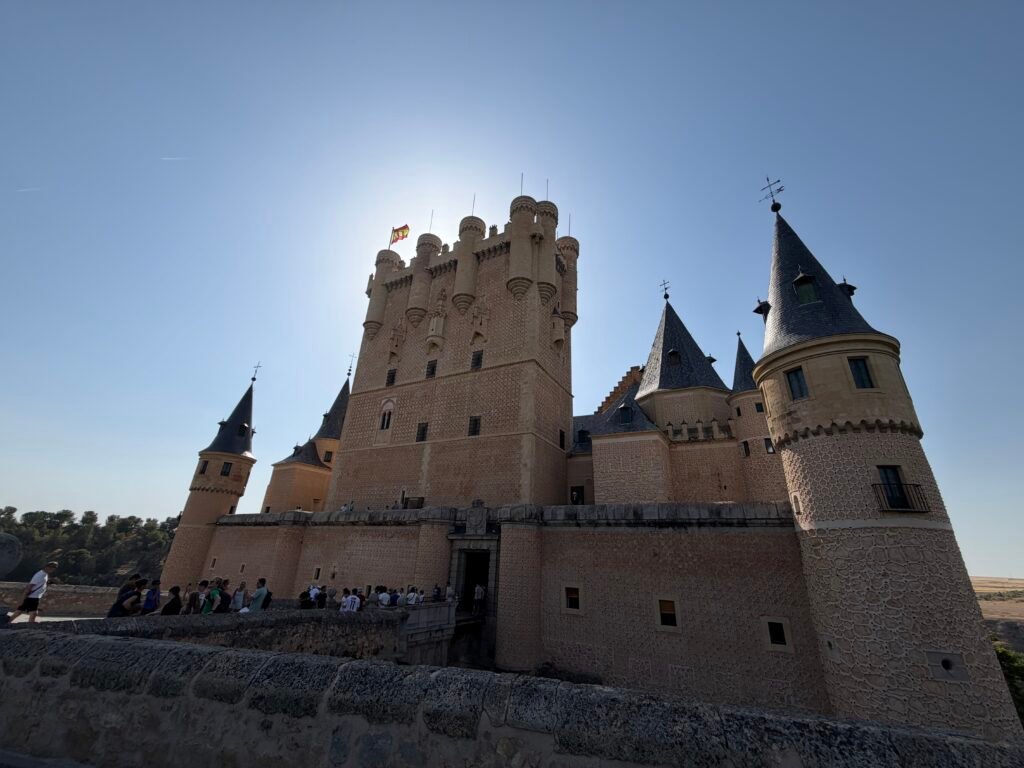
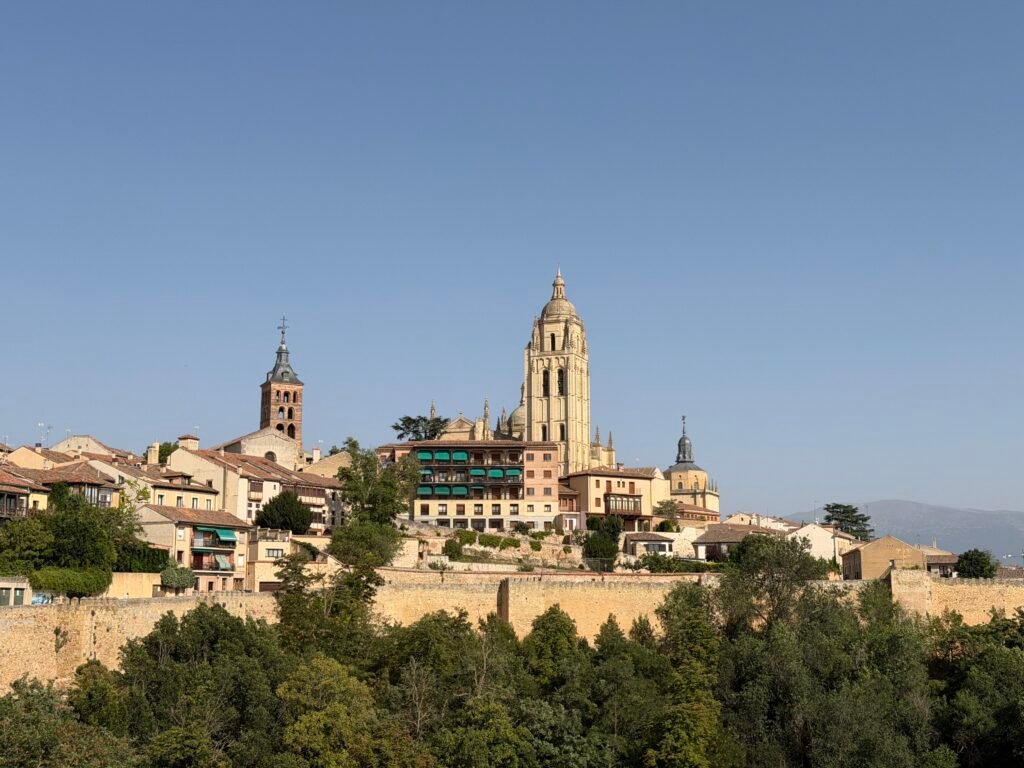
Segovia (Architectural Scouting Day): On the drive north toward my eclipse base, I took a detour to Segovia—navigating past some nearby forest fires—to tour its legendary 1st-century AD Roman Aqueduct, a masterpiece of ancient engineering featuring 167 arches built from thousands of granite blocks without a single drop of mortar. I also explored the fairy-tale Alcázar of Segovia (a fortress whose dramatic silhouette famously inspired Disney castle designs) and the grand Segovia Cathedral.
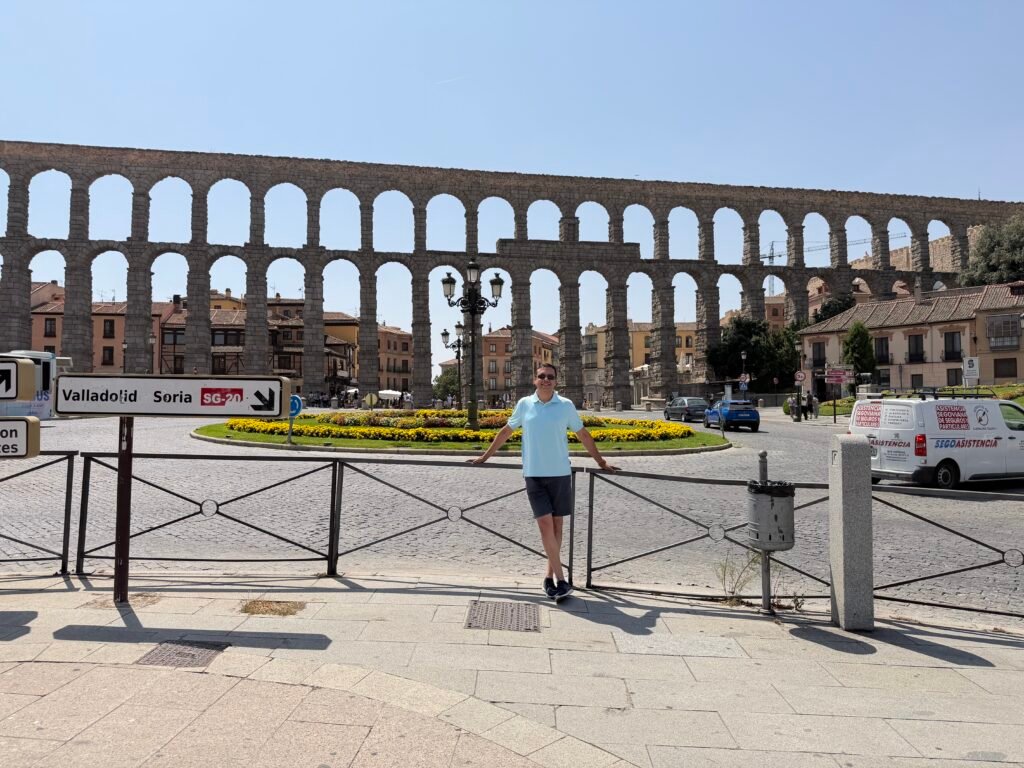
I was wondering how the eclipsed sun would look like under those ancient arches of the aqueduct and kudos to another fellow eclipse chaser that captured it perfectly – you can see it here –
4. Abejar & Muriel Viejo: The Eclipse Heartland
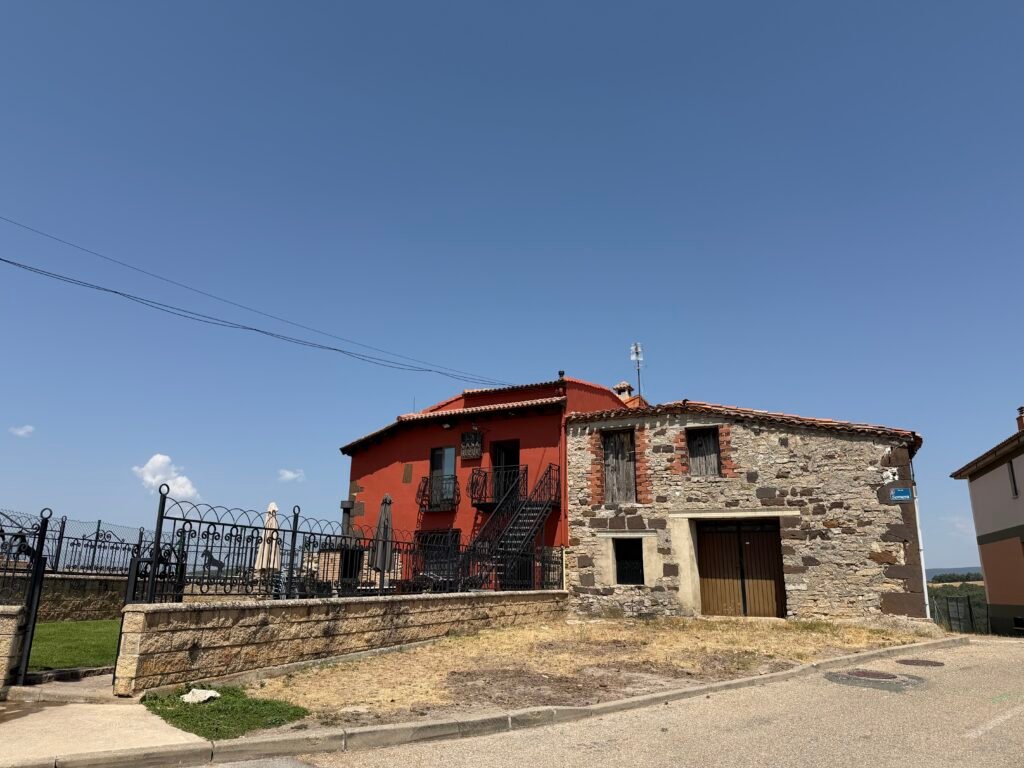
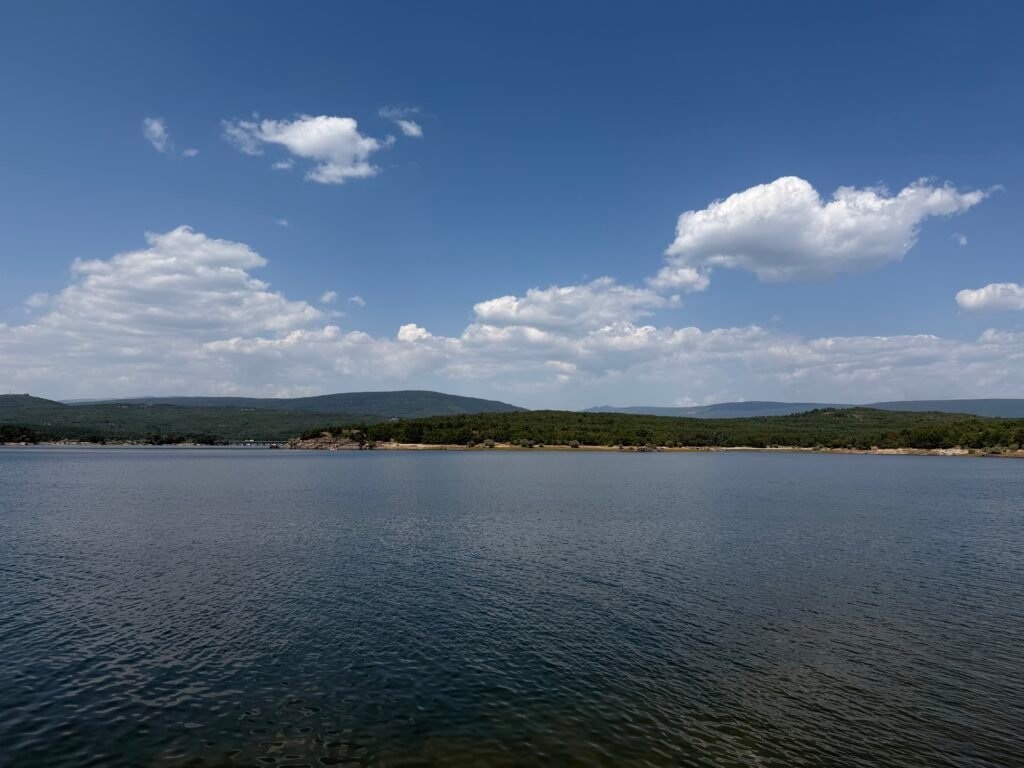
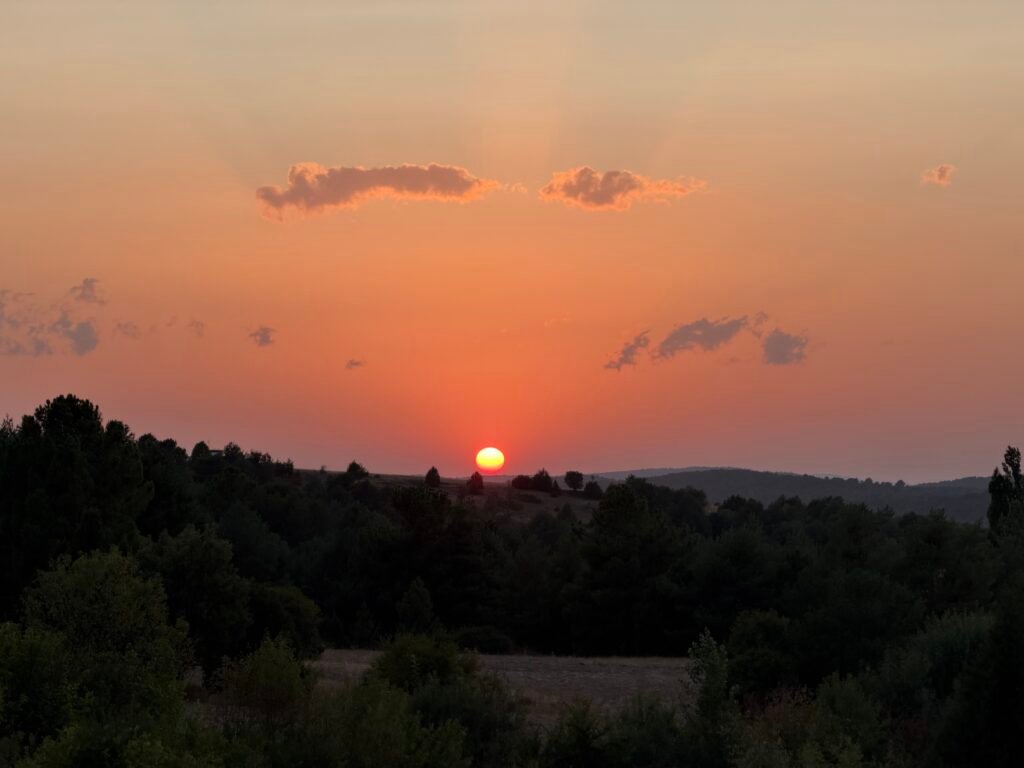
Establishing Headquarters: I arrived in the small central Spanish village of Abejar to set up my basecamp. My Airbnb host, María Victoria, was instrumental in helping me scout locations, navigate the village, and find great local dining recommendations in Abejar and nearby Soria.
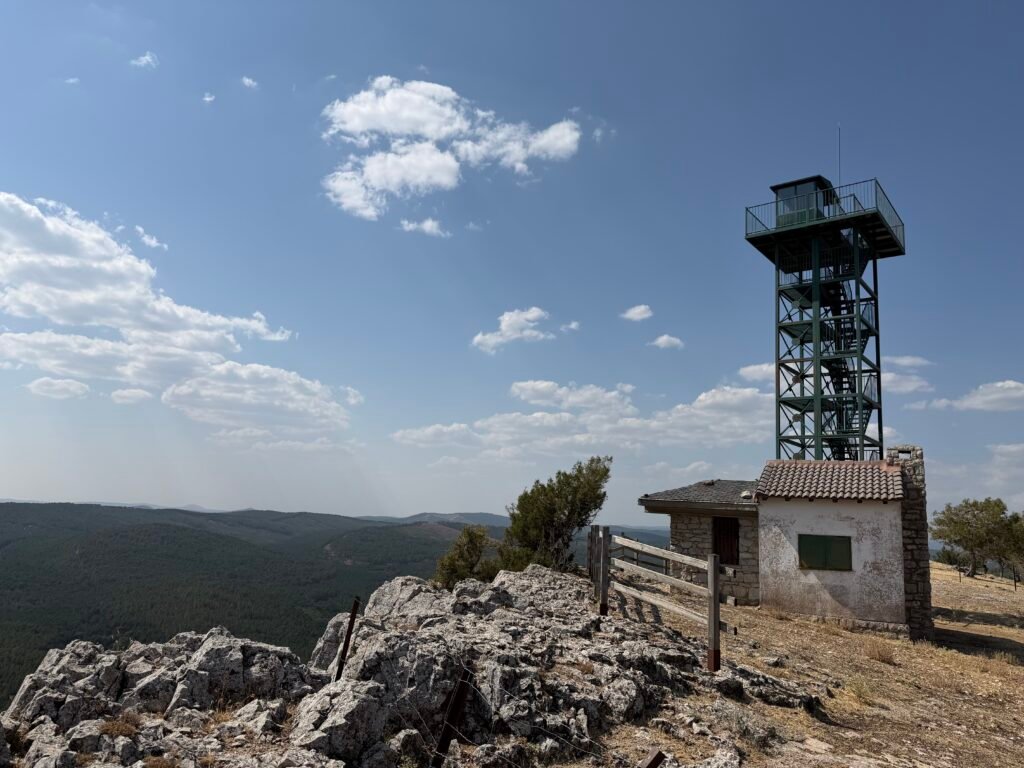
Site Scouting & La Peñota: I scouted several high-plateau locations, including a high-altitude gravel road up to La Peñota (sitting roughly 3,600 feet above sea level) in neighboring Muriel Viejo. Though it offered great potential, its steep, winding terrain provided limited mobility if weather conditions shifted. Ultimately, after checking the sun alignment, I realized my Airbnb’s connected backyard provided the absolute ideal unobstructed West-Northwest perspective for the low 10-degree totality window.
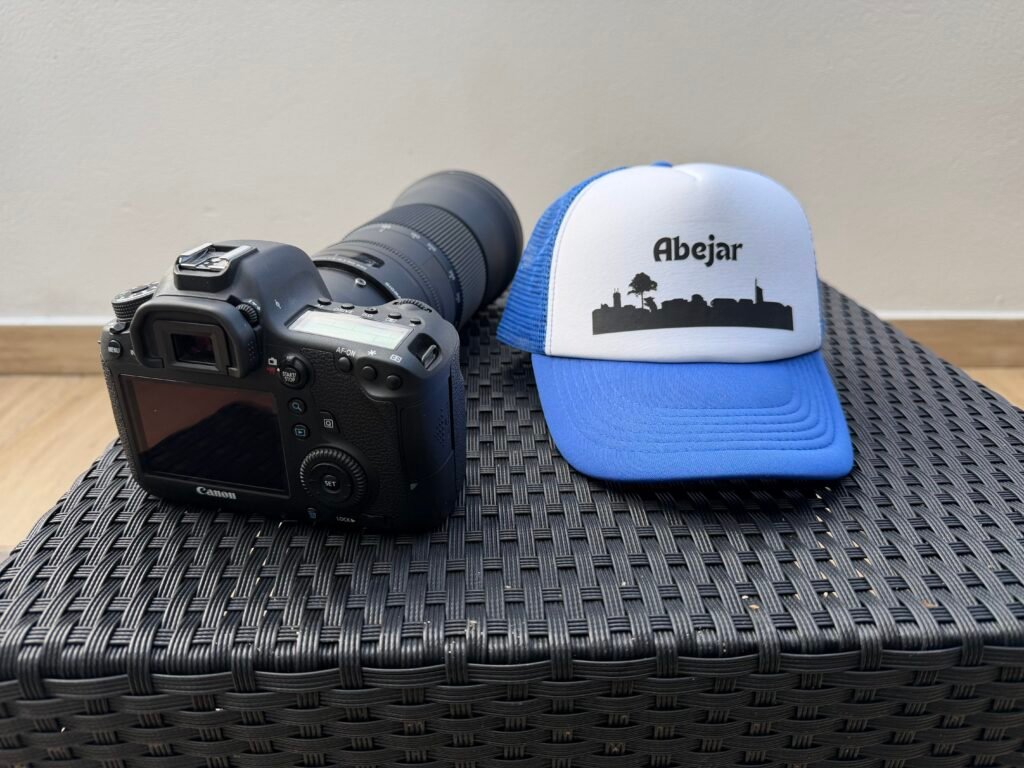
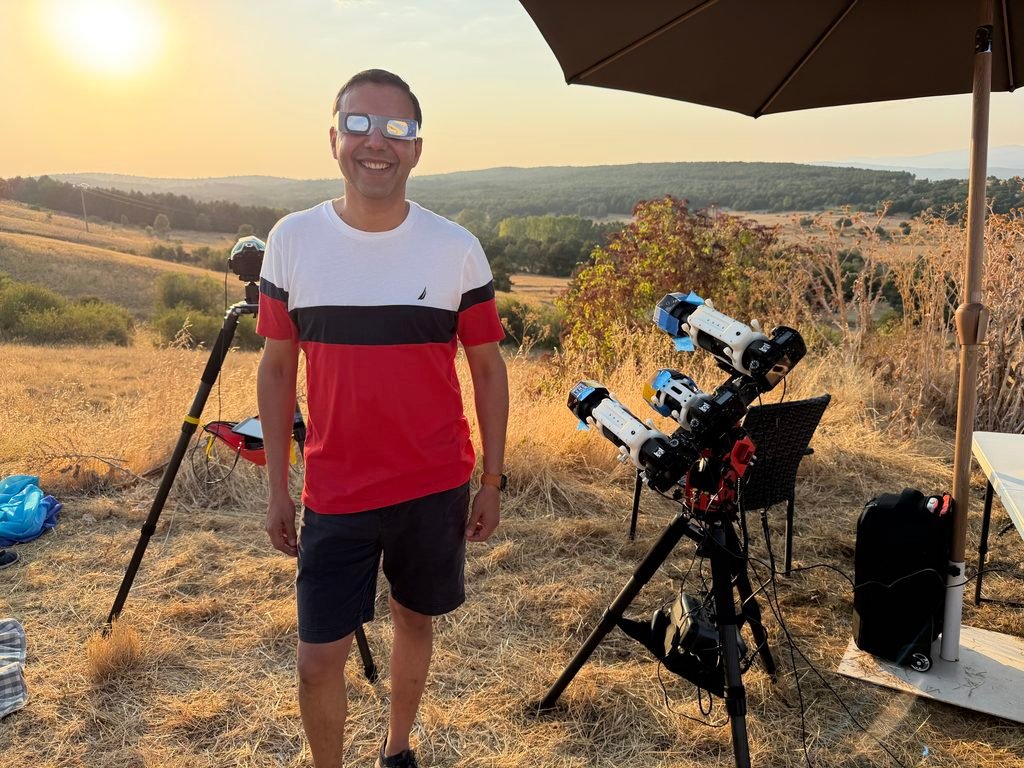
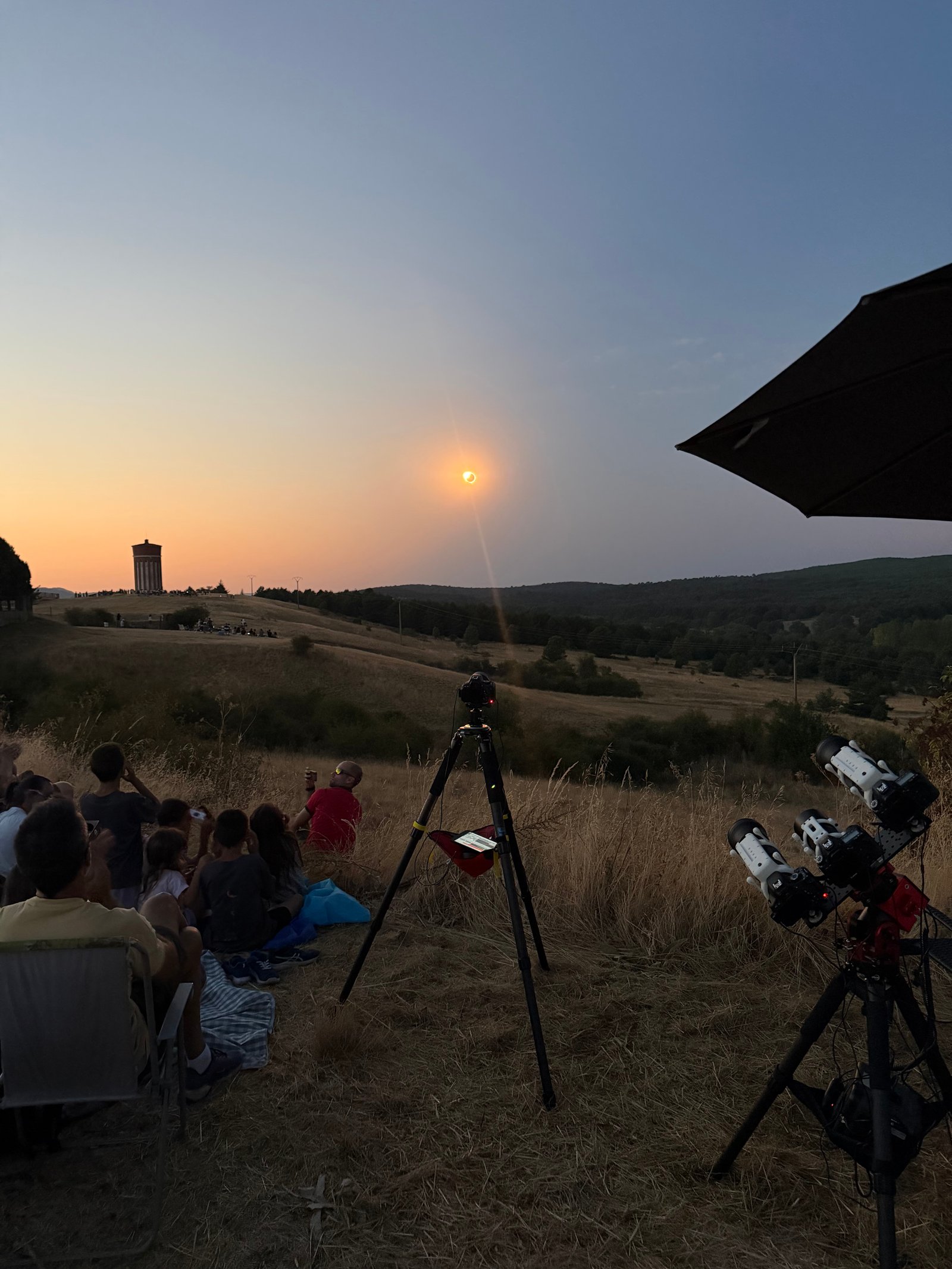
Eclipse Day & Community Connection: On August 12, the backyard filled with around 50 locals, tourists, and children as excitement built. I spent a few hours setting up my multi-camera rig—including three lenses on a ZWO tracking mount, a wide-angle Canon T3i for landscapes, and a DJI Action 4 for timelapses. Having shipped a mid-size battery and a folding table from Amazon Spain to the Airbnb proved vital against the demanding gear. As the diamond ring and Baily’s beads emerged during totality, sharing eclipse glasses with the local community and experiencing their pure amazement made the moment unforgettable. Afterward, locals gifted me a regional drink and a hat bearing the town’s name.
5. El Cielo de Muriel, Calatañazor, and Castle Gormaz: Exploring Ancient Strongholds
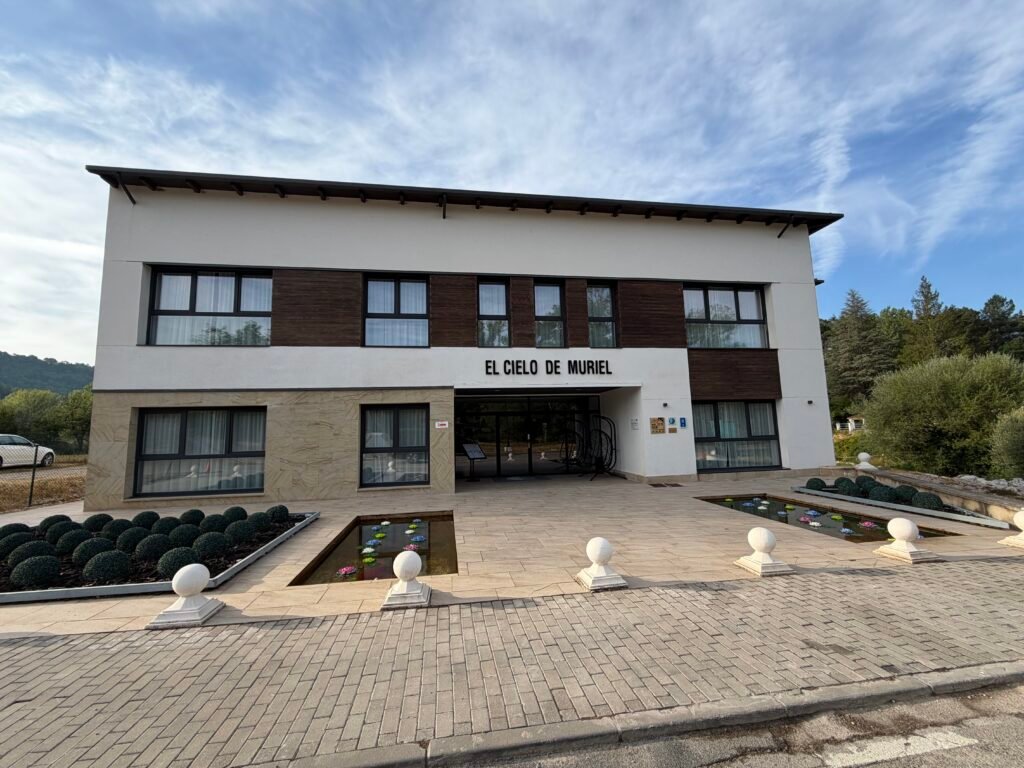
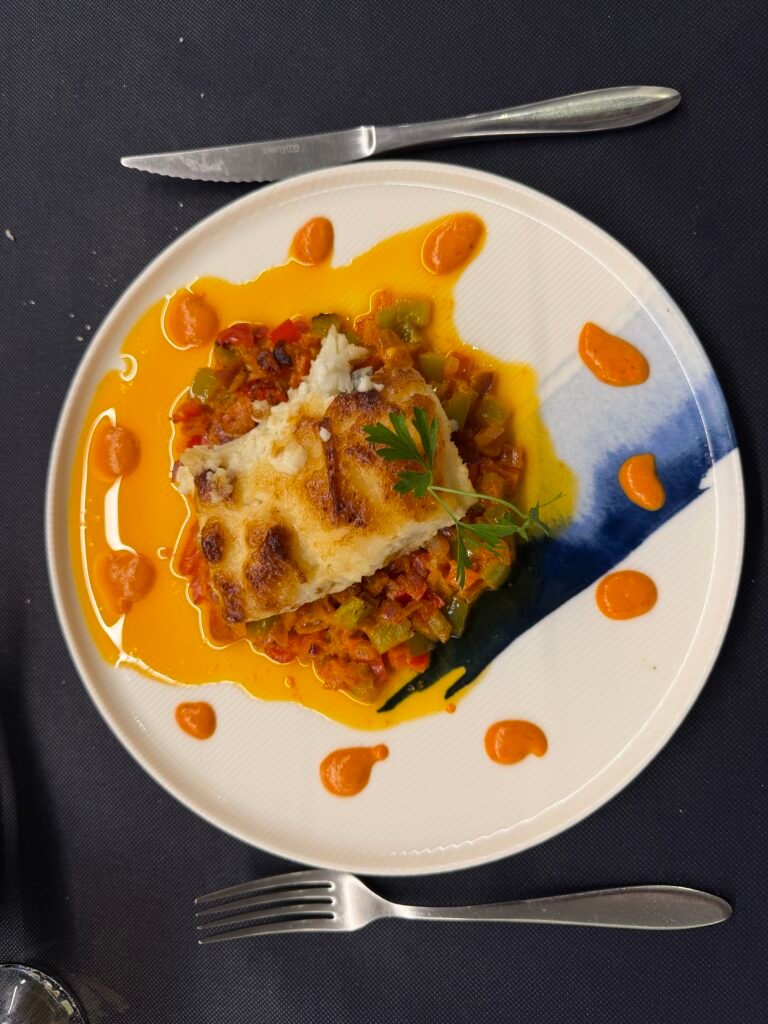
El Cielo de Muriel: Following the eclipse, I checked into El Cielo de Muriel, a Starlight-certified hotel and restaurant built for astrotourism and nature lovers. It proved to be an exceptional location for astrophotography projects, offering great terrace setups. I would highly recommend this hotel not just for its prime dark-sky location, but also for its wonderful hospitality. The front desk staff—Rochelle and Jasmine—were extraordinarily helpful in accommodating my early bag-drop requests, guiding me to local spots, and even looking after me by serving meals during quite late lunch hours. To top it all off, the hotel provided the comforts of incredible cuisine crafted by Chef Jose, whose dishes made every meal a highlight.
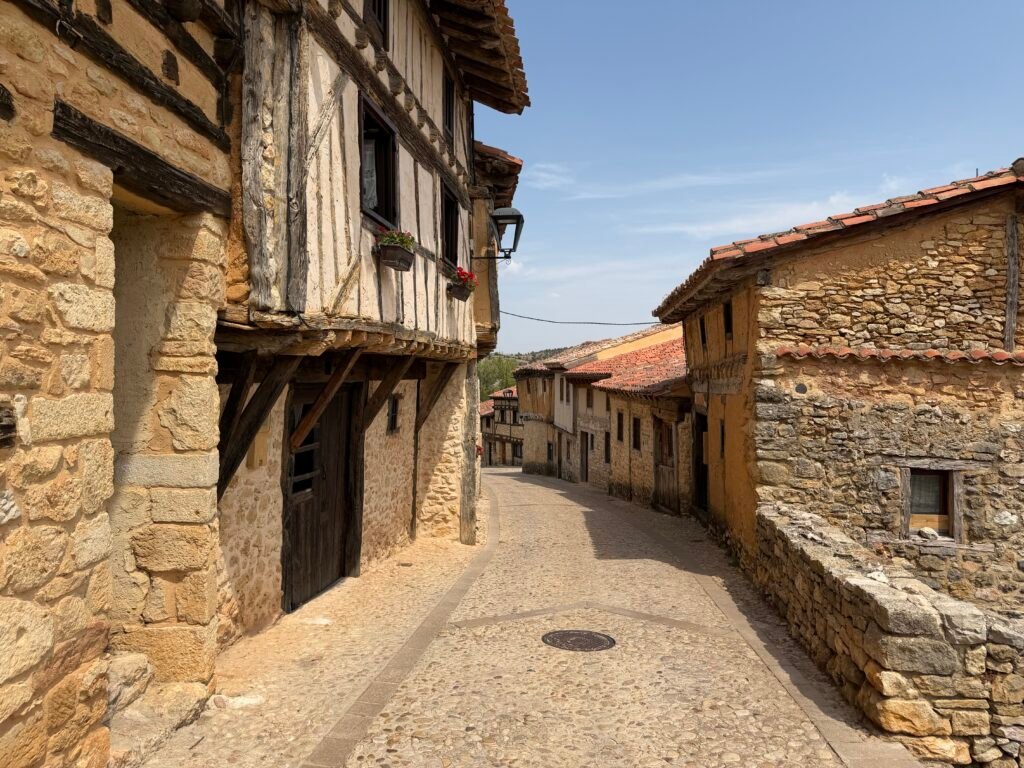
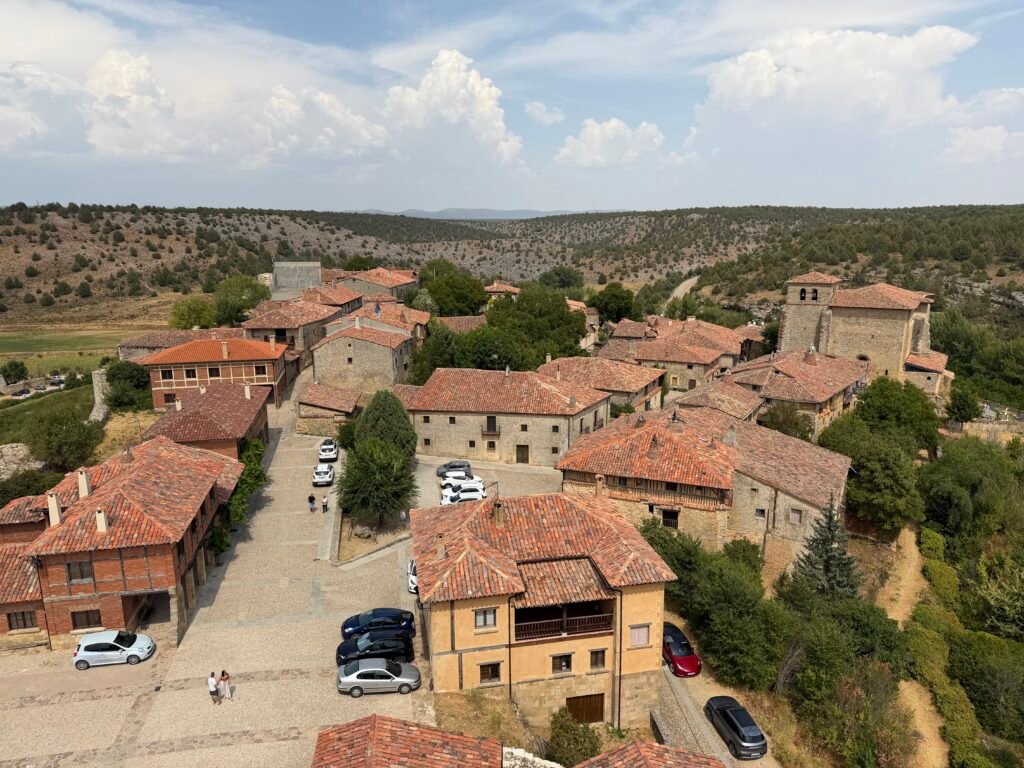
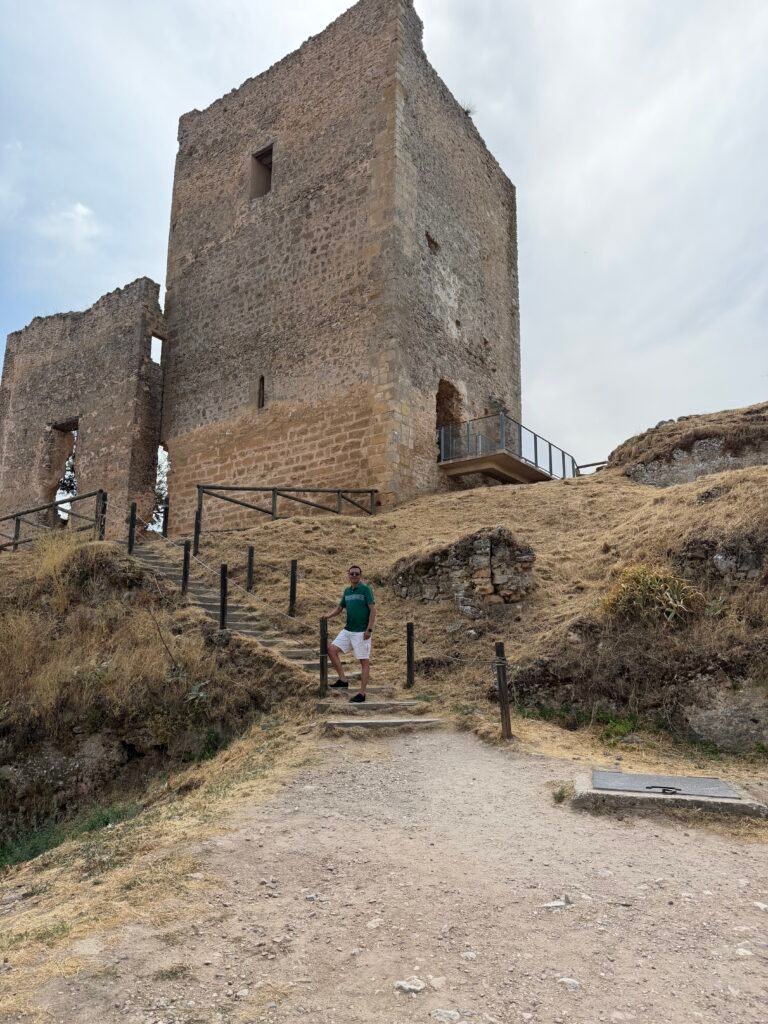
Calatañazor: Although incoming rain clouds unfortunately blocked my plans for Milky Way imaging over those nights, I used the time to explore nearby Calatañazor, an exceptionally well-preserved medieval village featuring ancient timber-framed houses, cobblestone streets, and the dramatic ruins of its 12th-century castle perched on a rocky crag overlooking the “Valley of Blood”.
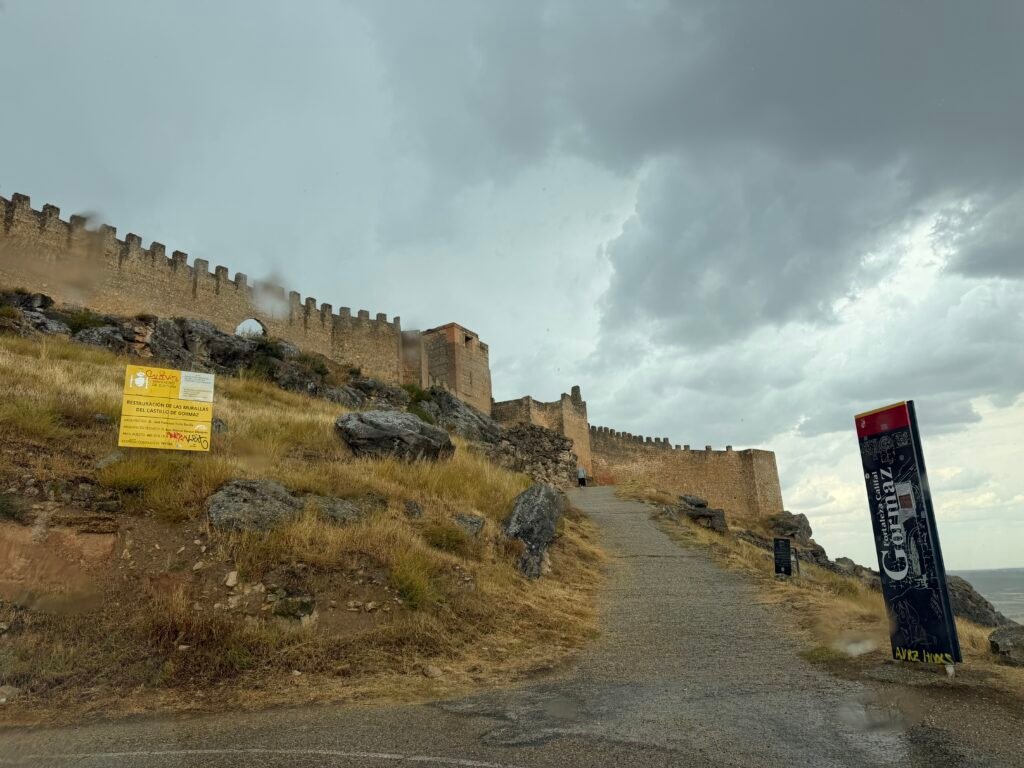
Castle Gormaz: Despite rainy weather, I drove out to explore Castillo de Gormaz, an immense monumental fortress built in the 10th century (with expansions around 965 AD) under the Caliphate of Córdoba. Once the largest fortress in Europe, its walls stretch over a kilometer long with 28 defensive towers, carrying deep historical ties to the legendary Spanish hero El Cid (who once served as its lord). Touring its sweeping, history-drenched perimeter offered an incredible window into medieval European borderlands before I packed up my gear, drove back to Madrid, and caught my return flights via Barcelona back to Boston.
Camera Bodies, Optics, and Multi-Rig Setup
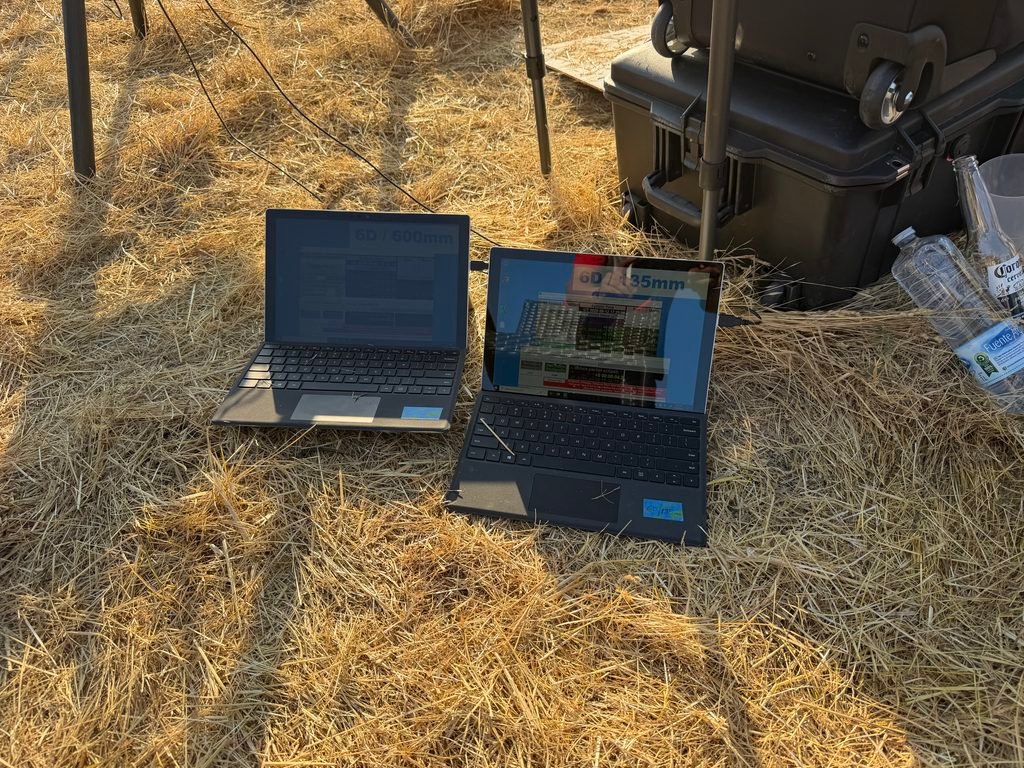
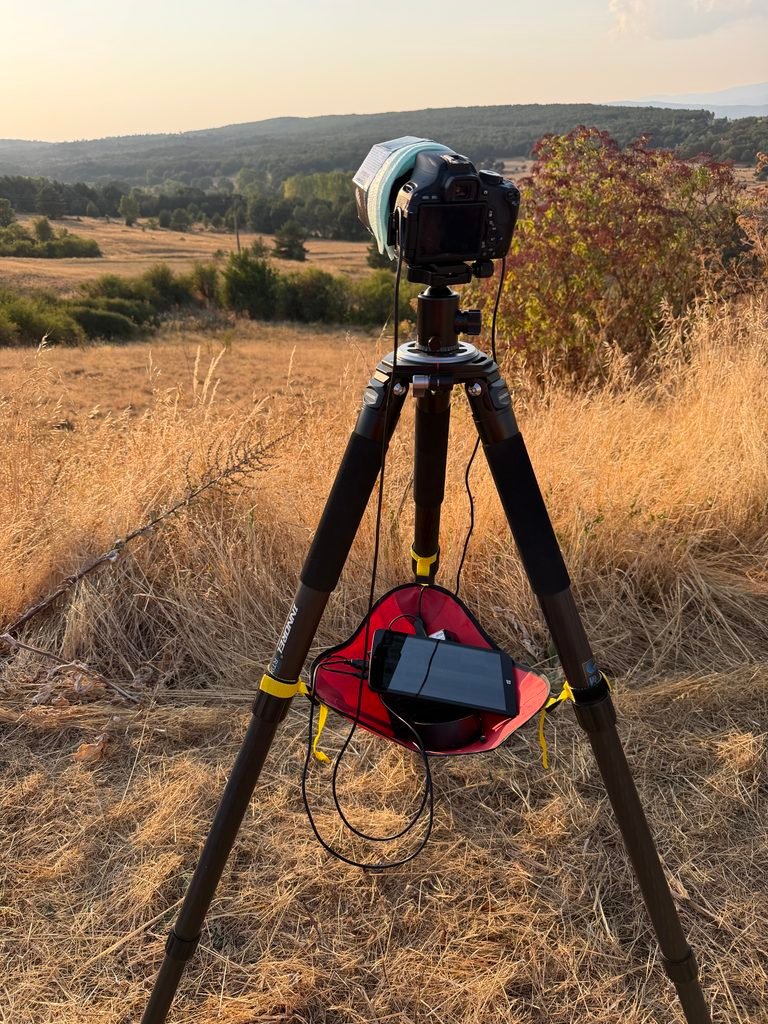
Executing a total solar eclipse expedition of this magnitude requires a multi-tiered imaging strategy to capture both wide contextual landscapes and razor-sharp high-magnification details of the solar corona, prominences, and Baily’s beads. To manage this complex multi-camera array autonomously, I utilized four separate Microsoft Surface Pro 5 tablets, each running an independent instance of SetNC software for automated, scripted triggering and exposure bracketing across pre-defined intervals. Here is the technical breakdown of how I configured my mobile observatory:
Camera Bodies & Optics
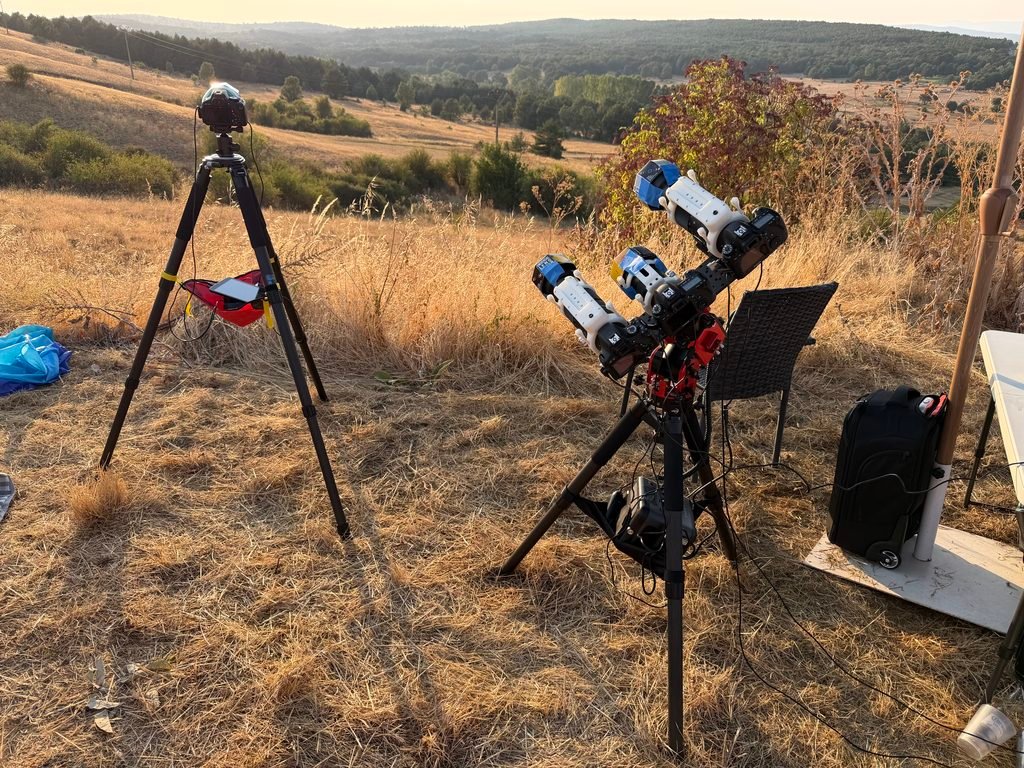
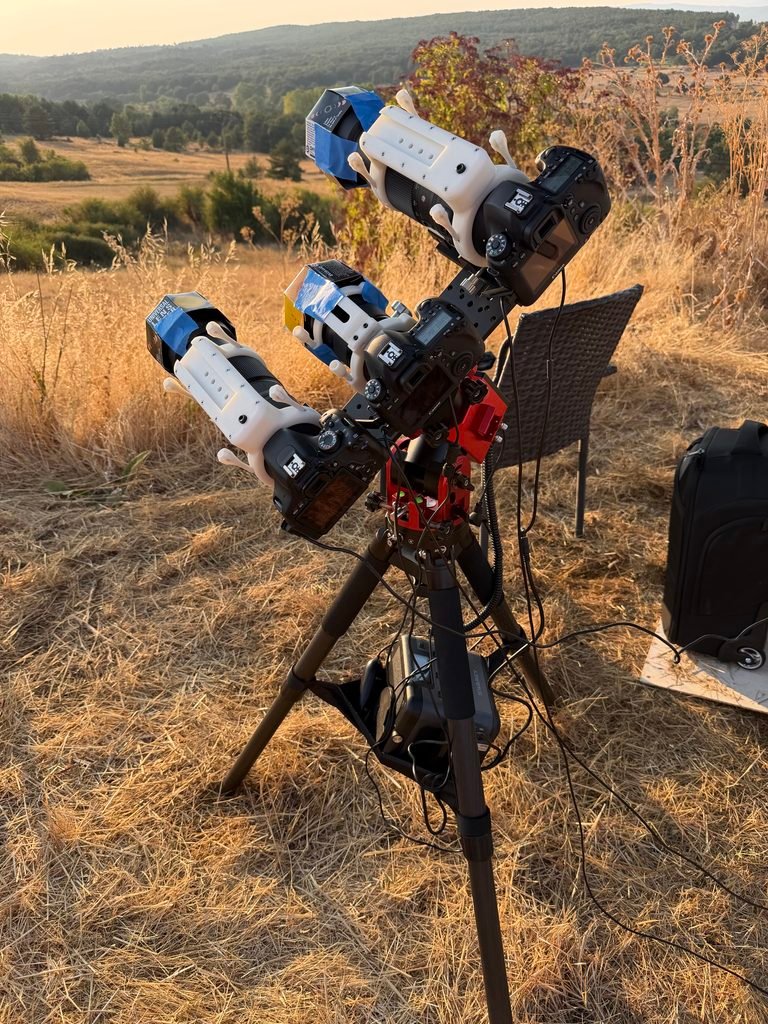
Rig 1 (High-Magnification Deep Corona – Camera A): Canon 6D paired with a Sigma 150-600mm Contemporary lens operating at 600mm. Mounted on the ZWO AM5 strain wave harmonic drive mount, this full-frame combination delivered incredible reach to resolve fine coronal streamers and delicate solar prominences during totality with minimal optical aberration.
Rig 2 (High-Magnification Deep Corona – Camera B): Canon T3i (Rebel 600D) paired with a second Sigma 150-600mm Contemporary lens operating at 600mm. Utilizing the APS-C 1.6x crop factor on the T3i effectively boosted the focal reach even further, providing a synchronized high-magnification secondary data stream alongside the primary rig.
Rig 3 (Wide/Mid-Field Corona & Prominences): Canon 6D paired with the Rokinon 135mm lens. This fast telephoto prime offered an exceptionally sharp, wide-field view of the entire solar corona and surrounding star field, capturing the broader atmospheric extension during totality.
Rig 4 (Stationary Landscape & Ambient Evolution): Stationary Canon T3i paired with a Rokinon 14mm ultra-wide lens. Fixed to a static tripod without tracking, this setup was dedicated to capturing wide landscape exposures of the shifting twilight horizon across the 360-degree horizon.
Rig 5 (Continuous Motion Reference): DJI Action 4 camera. Positioned to record continuous, high-definition timelapse footage of the entire event sequence, tracking both the environmental lighting changes and my active workflow throughout the eclipse window.
Closing Thoughts
A total solar eclipse eclipse expedition is a rare, humbling intersection where months of meticulous engineering, precise logistical planning, and heavy gear transport culminate in just a few fleeting moments of cosmic perfection. Though the incoming clouds later in the week reminded me of the unpredictable nature of astrophotography, the wonderful spectacle of totality in Abejar—shared alongside a wonderfully welcoming community of locals—made every single mile, technical hurdle, and ounce of preparation entirely worthwhile. When the shadow passes and the diamond ring fades, it is not just the data on the hard drives that stays with you, but the shared wonder of looking up together at the universe.
One of the locals from the day of the eclipse here. I’m so glad you liked Spain, and especially my town, Abejar. My favorite photo is the one of the landscape with the water tower, as it’s a real symbol of the town. Thank you so much for taking the time to explain your camera setup and the software you used to control the shots. It was a real pleasure meeting you, Shailesh. Best of luck with your future projects!