The Precision of the Night: Exploring the Cosmic Mosaic Gear Kits
From a quad-array backyard observatory to a 1200mm mobile eclipse rig, these are the tools I use to resolve the deepest corners of the cosmos.
Is the Canon 6D Still the King of Nightscapes in 2026?
“In an era of mirrorless dominance and ‘stacked’ sensors, there is a piece of DSLR history that refuses to be dethroned. The Canon 6D—a camera released over a decade ago—remains the secret weapon in my kit for one reason: its legendary signal-to-noise ratio. When I’m at a remote dark sky location, I don’t need 50 megapixels of noise; I need the clean, fat pixels that only this full-frame sensor provides. My mobile rig uses this ‘old’ workhorse as the gold standard for resolve and depth in nightscape photography.”

Canon 6D
The Canon 6D remains a legendary choice for astrophotography due to its incredible signal-to-noise ratio and full-frame sensor. It provides the low-light performance necessary for high-resolution nightscapes, resolving fine details in the dust lanes of the Milky Way.

Canon T3i
The T3i is the indispensable workhorse of my time-lapse workflow. Its lighter weight makes it ideal for mounting on motion-control sliders and panning heads without overtaxing the motors.
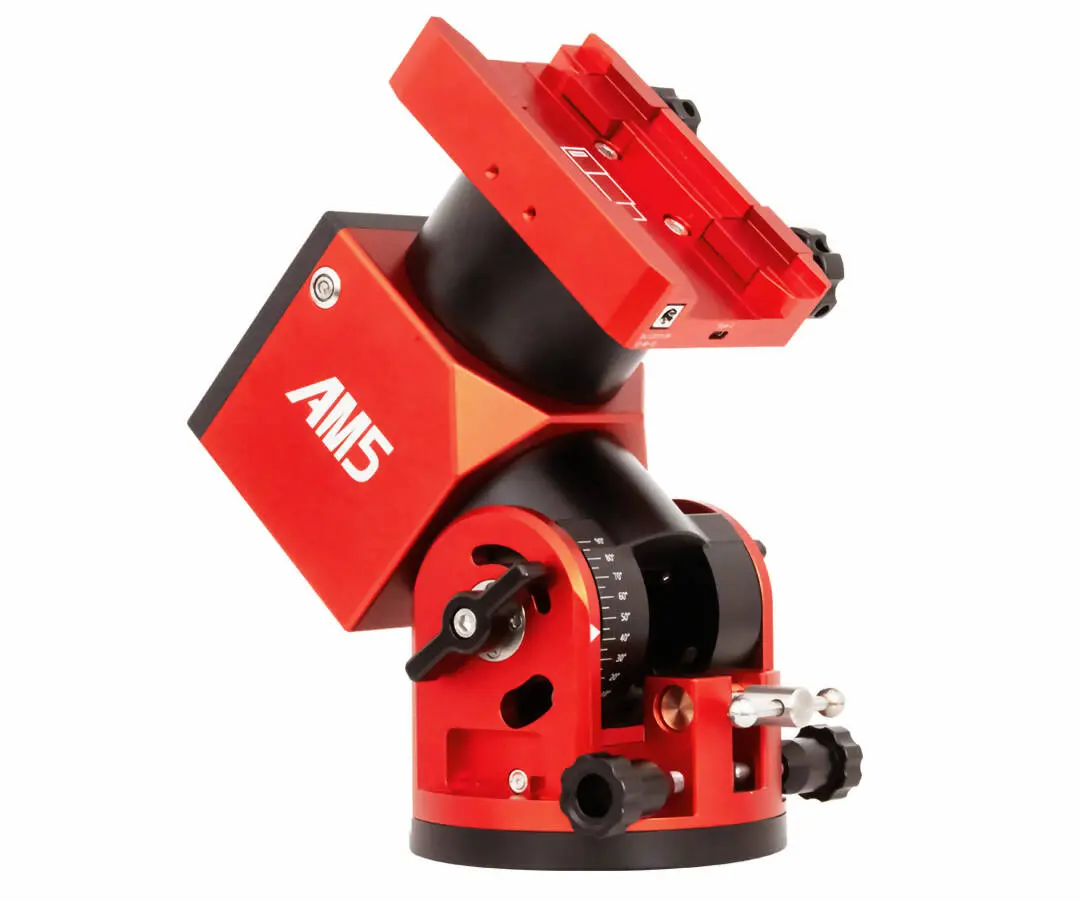
ZWO AM5 Harmonic Drive Mount
The ZWO AM5 represents a revolution in travel astrophotography, replacing traditional, heavy mounts with a high-torque harmonic drive system. Its counterweight-free design allows me to track the stars with sub-pixel precision.

Sigma 150-600mm f/5-6.3 DG OS HSM Contemporary
This telephoto zoom is the primary optical instrument for my Solar Eclipse expeditions. Chosen for its incredible versatility, the 150-600mm range allows me to capture the wide-field solar corona during totality while still providing enough reach to resolve fine solar details. Its rugged construction is essential for the outdoors, ensuring that the internal optics remain pristine during the critical minutes of the eclipse transition

Sigma TC-2001 2x Teleconverter
To maximize magnification for Solar Eclipse photography, I utilize the Sigma 2x Teleconverter. This pairing extends the focal length to a massive 1200mm, which is the “sweet spot” for resolving Baily’s Beads, solar prominences, and the delicate structures of the inner corona. By doubling the reach of my Sigma telephoto lens, I can achieve the high-magnification shots with ease, all while maintaining a portable, flight-ready kit.

Rokinon 14mm f/2.8 Lenses
The 14mm Rokinon is the widefield superstar for mobile rig, chosen for its massive 115° field of view. Unlike many wide-angle lenses, this manual prime is famous for its coma control, ensuring that stars in the corners remain sharp points. This is my go-to lens for landscapes and Milkyway Panorama shots.

Rokinon 135mm f/2.0 Lens
Known as one of the sharpest lenses ever made for astrophotography, its fast f/2.0 aperture allows me to resolve intricate details in nebulae and star clusters, bridging the gap between nightscapes and telescope imaging.

Syrp Motion Control System
To bring the night sky to life, I use the Syrp ecosystem of programmable motors. By syncing the camera’s shutter with motor movement, I can create cinematic “glides” that add depth and scale to my sequences. Note that these devices are not available any longer, so you might need to check third-party vendors like eBay if you want this specific model, otherwise there are comparable version available from other brands like edelkrone, Neewer, etc.

Talentcell 122Wh Battery
The Talentcell 122Wh lithium-ion battery is the silent hero of my rig, providing the 12V DC power required to run the ZWO mount and motion controllers throughout the night.

Ecosonique 200W Solar Panel
To sustain multi-night expeditions, this 200W panel recharges my high-capacity batteries during the day, ensuring my cameras and mounts are powered by sunset, regardless of how far I am from civilization.

Innorel RT90C Carbon Fiber Tripod
Constructed from 40mm diameter carbon fiber tubes, it provides extreme rigidity against desert winds. Its lack of a center column allows it to sit low—perfect for dramatic foreground perspectives.
Deep Space Resolved: Harnessing the Power of the Esprit 150mm Triplet
“In the quest for the faintest nebulae and the most distant galaxies, aperture is the ultimate currency. My primary observatory rig is built around the massive Skywatcher Esprit 150 Triplet APO, a refractor that commands the night with its 150mm of high-contrast glass. Seated atop the industrial-grade stability of the iOptron CEM120, this system is my ‘deep-space engine.’ It allows me to resolve the intricate structures of the cosmos that remain hidden to smaller optics, providing a level of clarity and depth that only a large-scale, permanently mounted refractor can deliver.”
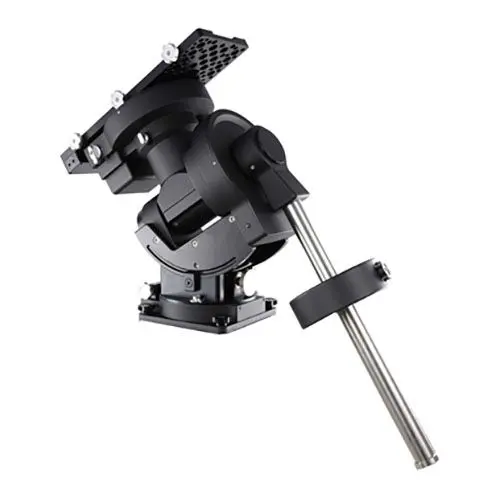
iOptron CEM120 Mount
The center-balanced equatorial mount (CEM) design offers a natural stability that handles the significant weight of the 150ED with ease. Mounted on a permanent iOptron pier within the observatory, this system provides a 120LB payload capacity. This mount provides me the stability for the sub-arcsecond guiding required for long-exposure deep-sky imaging in the Northeast winters.

Sky Watcher 150mm Esprit ED Triplet APO
The crown jewel of my primary observatory setup. This 150mm apochromatic refractor utilizes a three-element air-spaced objective lens, featuring an extra-low dispersion (ED) center element. The result is absolute color correction and razor-sharp contrast across the entire imaging circle. With a focal length of 1050mm, it provides the reach and resolution necessary to resolve the delicate spiral arms of distant galaxies and the fine filaments of planetary nebulae, cutting through the atmospheric turbulence of the Northeast with remarkable clarity.
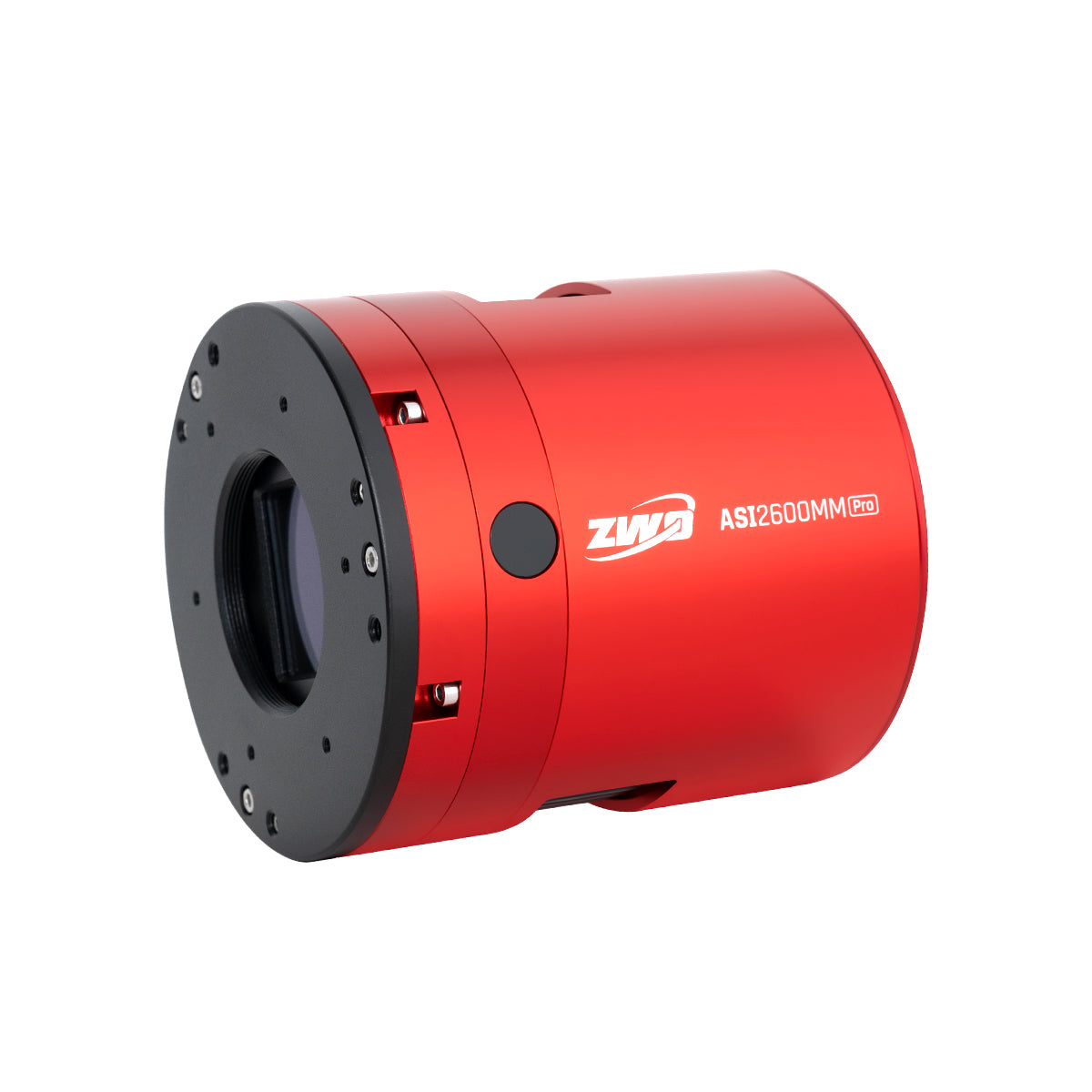
ZWO ASI2600MC-Pro
The primary imaging sensor for the observatory. This APS-C cooled CMOS camera features zero amp-glow and a massive dynamic range. By cooling the sensor to -20C below ambient, thermal noise is virtually eliminated, allowing for the incredibly clean long-exposure data needed for subtle nebulosity.
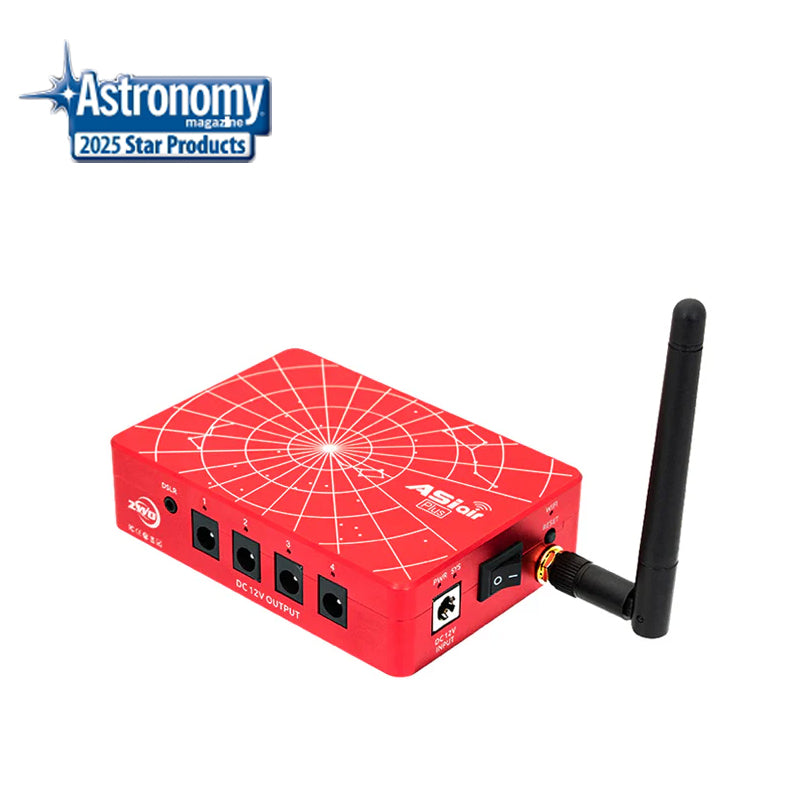
ASIAIR Plus
The “brain” of the observatory. The ASIAIR manages the mount, camera, and focuser via a single wireless interface. It handles everything from polar alignment and plate solving to the complex auto-guiding sequences, allowing for fully automated imaging sessions from the comfort of the indoors.
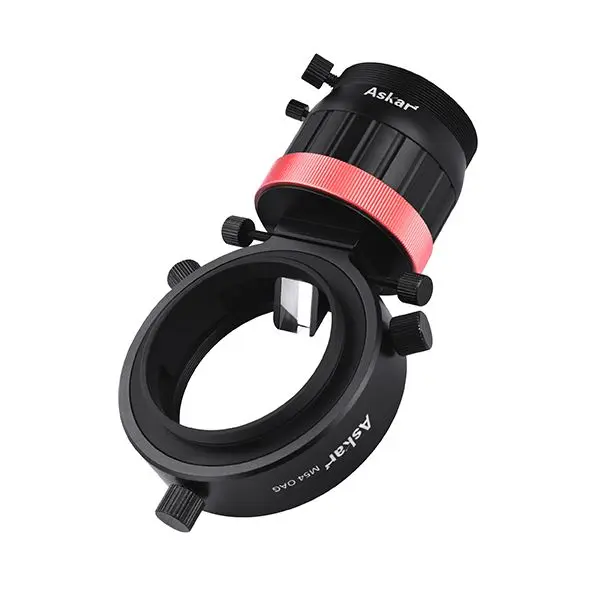
Askar OAG-L
To eliminate differential flexure in a large refractor, I utilize an Off-Axis Guider (OAG-L) paired with the ZWO 120MM-mini. This setup picks off a small portion of the actual light path to guide the mount, ensuring that the tracking stays pixel-perfect even during multi-hour exposures at long focal lengths.
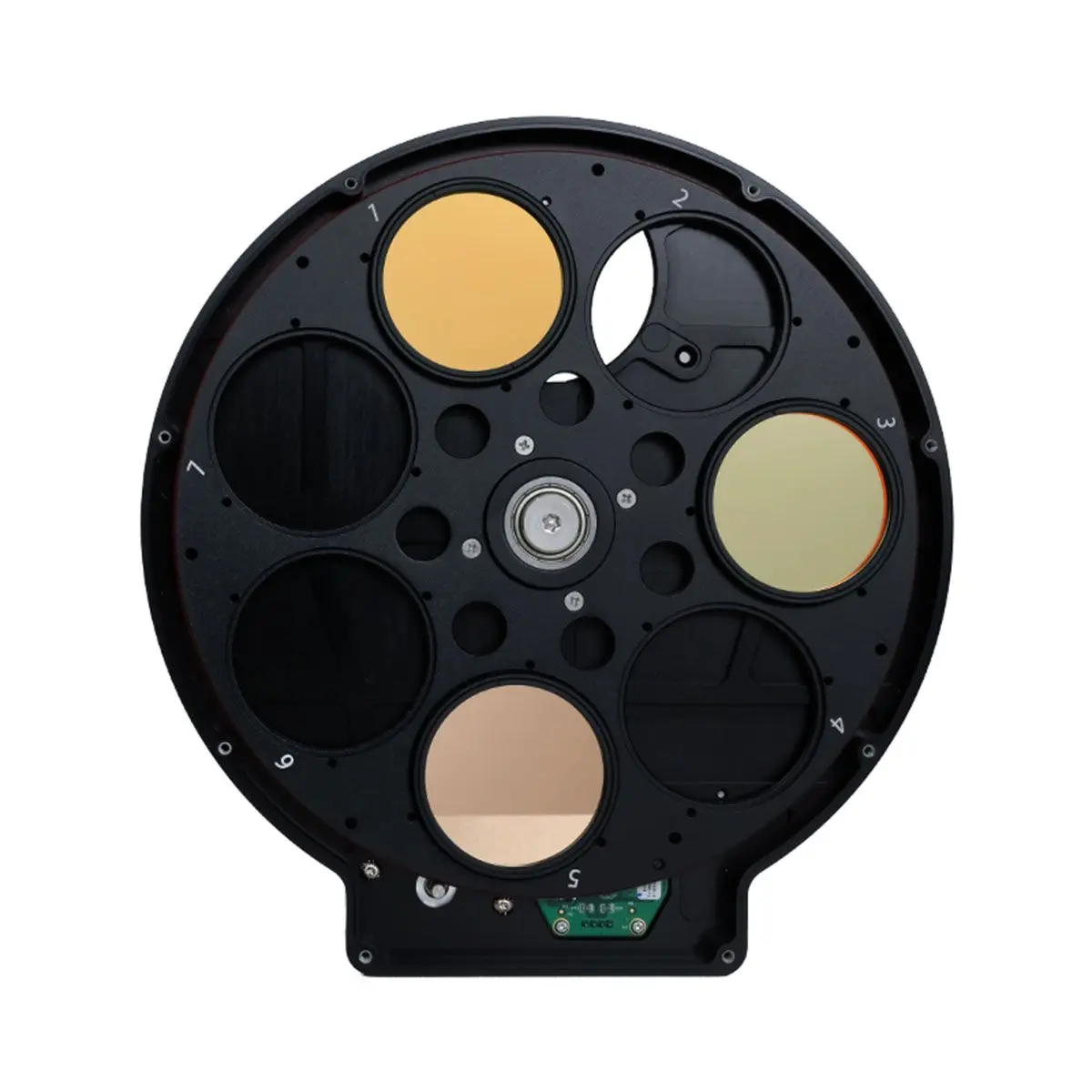
ZWO EFW 2″
This automated filter wheel houses a set of 2″ Svbony light pollution filters and a dark filter. These filters allow me to shoot even during high moon cycles or through the light pollution by isolating specific wavelengths of light.
Building the Quad-Rig: 4 Telescopes, 1 Mount, Infinite Detail
“Most astrophotographers spend their nights fighting the clock, trading sleep for a few precious hours of integration time. By arraying four identical 100mm APO refractors on a single mount, I’ve effectively quadrupled my productivity, turning a standard six-hour Northeast window into a 24-hour powerhouse of signal-to-noise perfection.”
iOptron CEM120 Mount
The CEM120 is the heavy-lifting heart of the second observatory. Its center-balanced equatorial design is specifically engineered to handle the high moment of inertia generated by a four-telescope array. By placing the payload directly over the center of the pier, it provides the tracking accuracy and mechanical stability required for deep-sky imaging at high resolution.

MOAP (Mother Of All Piers)
A multi-telescope rig is only as good as the foundation it sits on. The MOAP Pier provides the absolute rigidity necessary to eliminate vibration and flexure. Bolted directly to the observatory’s concrete isolation slab, this pier ensures that the mount remains perfectly leveled and polar-aligned, even under the shifting weight of the quad-array during long slews.

Radian 100mm OTA (Quad Array)
The “Quad-Rig” configuration utilizes four identical Radian 100mm apochromatic refractors. This parallel processing allows for the simultaneous acquisition of different wavelengths—capturing Red, Green, Blue, and Luminance data at the exact same time. This setup effectively turns a single night into four, drastically increasing the signal-to-noise ratio in my final images. Note that this particular OTA was about to be released when OPT went under, but I was able to snag four of these sweet OTAs. It is essentially a rebranded Sharpstar Z4 with some cosmetic modifications
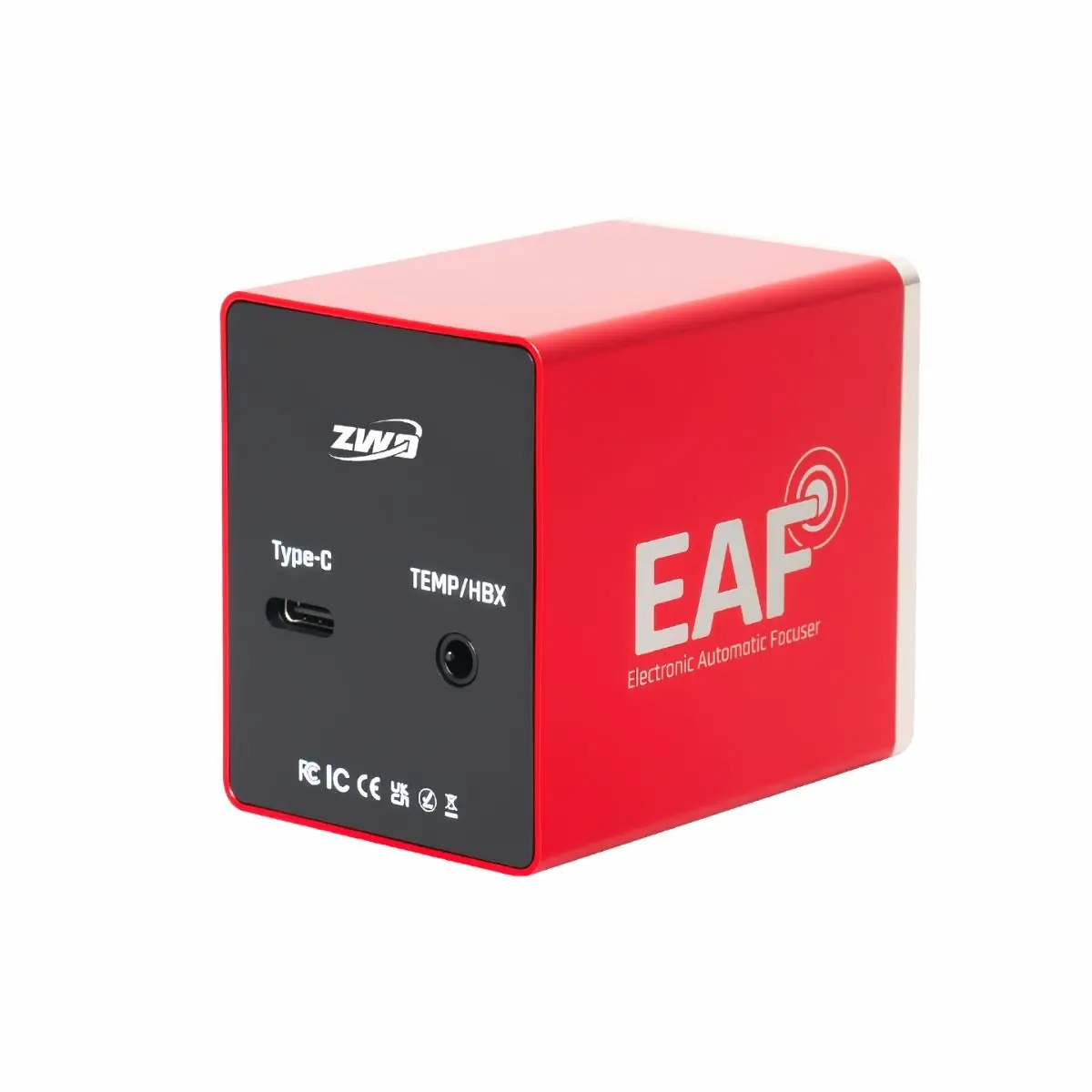
ZWO EAF (5V) x 4
Precision focus is the difference between a “good” image and a “gallery-grade” one. This 5V version of the EAF simplifies the rig by drawing power directly via USB, eliminating extra power cables. With a resolution of roughly 2.8mu per step, it allows for micron-level adjustments and fully automated autofocus routines in N.I.N.A. or ASIAIR, compensating for focus drift caused by the dropping temperatures in the night.

ZWO ASI533MM-Pro (Quad Array)
Paired with each refractor is a ZWO ASI533MM-Pro monochrome camera. The square 3008 x 3008 sensor format is perfect for the image circle of the Radian 100, providing zero amp-glow and a high 14-bit dynamic range. Having four identical sensors ensures that the pixel scale and field of view are perfectly matched, simplifying the registration and stacking process in post-production.

Optolong 2″ LRGB & Narrowband Filters
Precision wavelength control is handled by a complete suite of Optolong 2″ filters. This includes LRGB for natural broadband color and high-performance Narrowband filters (H-Alpha, SII, OIII). At any point in time, the array is running a set of LRGB or SHO+L filters. By isolating the specific emissions of ionized gases, these filters allow for deep-sky imaging even under the moderate light pollution of the Northeast, revealing the intricate structures of distant nebulae.

WandererAstro Wanderer Box Pro V3
The WandererAstro Wanderer Box Pro V3 serves as the central command hub for the Cosmic Mosaic imaging rig, providing rock-solid power distribution and data management. It streamlines my cable runs by offering 10 dedicated power outputs—including a 19V supply for the mini PC—alongside 9 switchable USB ports for full accessory control. The integrated intelligent dew heating uses real-time environmental sensors to keep the optics clear automatically, even during the most demanding nights. Fully ASCOM-integrated, this hub ensures maximum reliability and automation for capturing seamless, high-resolution deep-sky data.

MeLE Fanless Mini PC Quieter3Q
The MeLE Quieter3Q Fanless Mini PC serves as the compact, high-efficiency compute engine for the Cosmic Mosaic setup, handling all imaging and session automation. Powered by an Intel Celeron N5105 quad-core processor and 8GB of LPDDR4x RAM, it provides the responsive performance needed for deep-sky workloads without the vibration or dust concerns of traditional fan-cooled systems. Its ultra-slim, pocket-sized design integrates perfectly into the rig with four USB 3.0 ports. This silent powerhouse is the ideal choice for a reliable, “set-it-and-forget-it” astrophotography command center.