The Tatacoa Desert isn’t actually a desert; it’s a tropical dry forest. But for an astrophotographer, it’s something else entirely: a natural planetarium. In February 2026, I traveled to this eroded Martian landscape in Colombia to capture the Galactic Core during the New Moon. Here is the “behind the curtains” look at how I pulled off the trip.
1. The Travel Approach: Navigating to the Dust
From the US to the Gateway
Most major US international airports (JFK, MIA, LAX, IAD) offer direct flights into Bogotá (BOG) via carriers like Avianca or LATAM. From the capital, you have three distinct paths:
- The Scenic Route (Bus + Ferry): For the budget-conscious or adventurous, you can take a 5–6 hour bus ride from Bogotá’s Terminal del Sur to Aipe. From there, you cross the Magdalena River on a small motorized boat (ferry) directly to the docks of Villavieja.
- The Fast Track (Domestic Flight): A quick 1-hour flight from Bogotá lands you at Neiva (NVA). This is the most time-efficient option, especially if you want to maximize your shooting nights.
- The Road Trip (Private Drive): You can hire a private car from Bogotá, though it’s a long haul (6–7 hours) through winding mountain passes.
Ground Transportation: The SUV Advantage
While many travelers rely on the iconic local Tuk-Tuks (three-wheeled taxis), I opted for maximum autonomy. Upon landing in Neiva, I headed straight to the Localiza counter inside the airport to pick up a rental SUV.
- Why the SUV? The “road” into the desert, particularly toward the Grey Desert (Los Hoyos), can be washboarded and dusty. While a sedan can make it, the ground clearance of an SUV provides peace of mind when navigating the red clay ruts.
- Flexibility is King: Having my own vehicle was the single best decision of the trip. Tuk-Tuks are charming but bumpy, slow, and often have long wait times during peak hours. With the SUV, I could leave for a late night photoshoot (or early morning return) without coordinating a pickup or stay in the canyons until the very last light of blue hour without rushing.
- The Cost-Benefit: While renting a car in Colombia is more expensive than local transport, the ability to use it as a mobile “base camp”—storing my equipment, extra water, and multiple tripods—was worth every peso for the added productivity and convenience.
The Final Stretch
From Neiva, it is a 1-hour drive to Villavieja. The road is paved until you reach the town, but once you cross into the desert boundaries, the terrain becomes unpaved. Having the SUV meant I could navigate these final kilometers with ease, arriving at the hotel refreshed and ready for the night ahead.
2. The Two-Hotel Strategy: Maximizing Comfort and Access
Logistics in the Tatacoa Desert are a delicate balance between escaping the brutal equatorial heat and being in position for the perfect shot. To solve this, I employed a “Base Camp vs. Field Station” strategy, using two different hotels to optimize my workflow.
Daytime Base: El Shaddai (The Oasis)
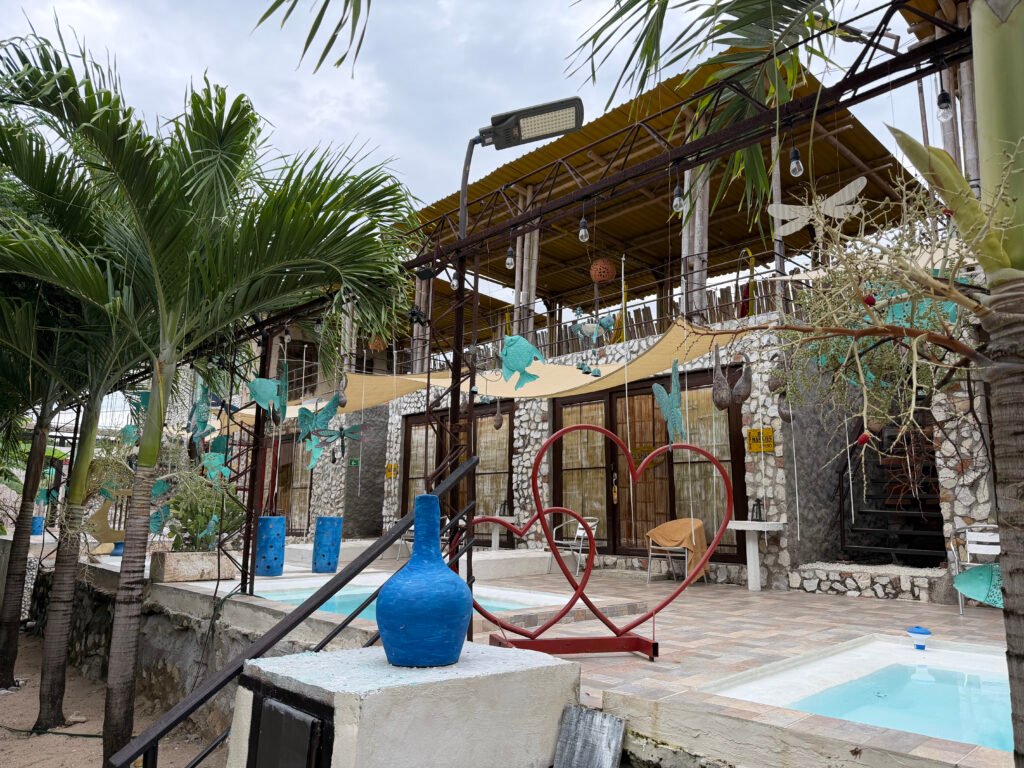
For my daytime recovery, I chose El Shaddai. Located just on the outskirts of Villavieja, it served as my sanctuary for modern conveniences.
- Amenities: After a long night of shooting, the air conditioning and private pools at each room were life-savers. The desert sun is unforgiving, and having a cool, quiet place connected to the town’s electrical grid to edit photos and recharge (“myself”) and my Talentcell batteries was essential.
- The “Second Family” Experience: What truly set El Shaddai apart was the incredible hospitality. Newton, his wife, and Rafael provided such attentive and warm service that they practically felt like my second family by the end of the trip. Whether it was a perfectly timed chuletón (steak) or just a friendly check-in on how my night went, their care made the logistics feel effortless.
Nighttime Base: Hostal Laberinto Del Cusco (The Front Line)
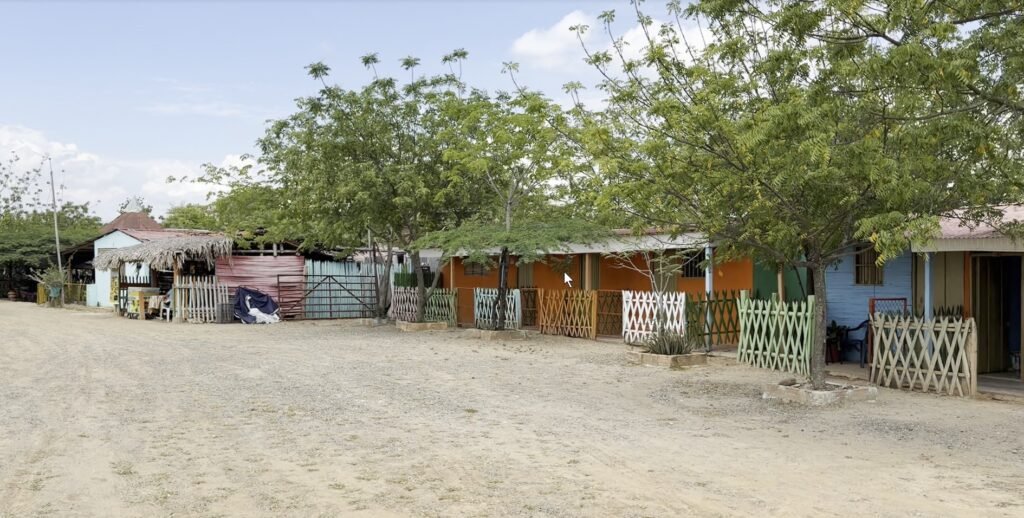
When the sun began to dip, I moved my operations deeper into the desert to Hostal Laberinto Del Cusco. This rustic lodge sits literally at the footsteps of the Red Desert (Cuzco).
- Strategic Proximity: By staying here at night, I eliminated the commute from town. I was able to walk a few steps to be into the heart of the red labyrinths, maximizing every minute of the New Moon window.
- Tailored Support: The hosts, Sofia and Alberto, were exceptional. They understood the needs of a photographer and went out of their way to help me select the specific cabin that best accommodated my gear setup.
- Beating the Heat: Even at night, the desert retains a significant amount of heat. Sofia and Alberto provided me with a cooler to store my beverages, ensuring I stayed hydrated and refreshed during those long, humid pre-dawn sessions.
The Commute: The SUV Advantage
These two properties are only about 10–15 minutes apart, but having the rental SUV turned this commute into a breeze. I could easily shuttle my heavy gear, tripods, and coolers between the relative luxury of El Shaddai and the tactical proximity of Laberinto Del Cusco. This “dual-hub” approach allowed me to stay well-rested while never missing a moment of the Galactic Core rising over the red canyons.
3. Packing Strategy: Protecting the Glass and Managing the Mass
Transporting photography gear into a dusty, tropical environment requires a “Russian Doll” approach to packing—layers of protection that balance security for the flight with accessibility in the desert, while handling the bumpy ride on the desert roads. My setup was split into four main components to handle the weight and delicacy of the equipment.
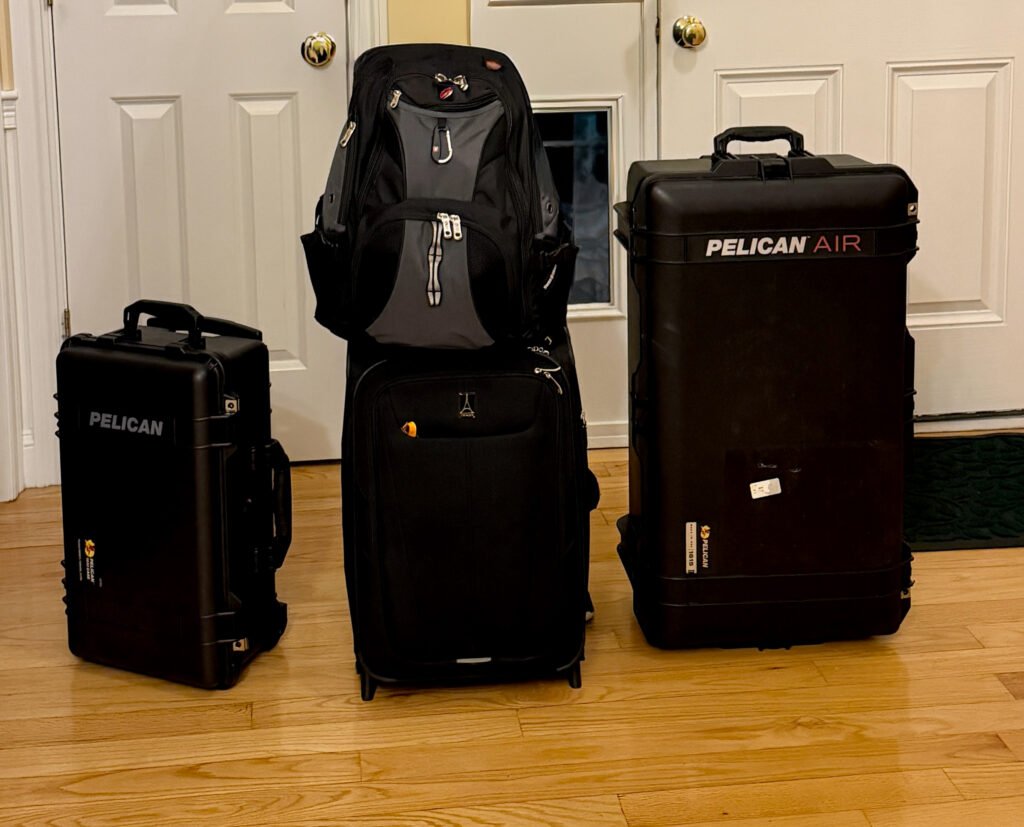
The Heavy Lifters: Pelican Air 1615
For the bulky, heavy-duty gear, I relied on a Pelican 1615 Air Case (with a padded insert) as my primary checked bag. This case is incredibly rugged but light enough to stay under airline weight limits.
- The Payload: This housed the skeleton of my setup: my heavy-duty tripods, Syrp tracks for sliding shots, and multiple Neewer ball heads.
- Dual Purpose: I used my clothing as additional “soft armor” around the metal components, saving space and providing extra vibration dampening for the long haul from the US to Neiva.
The Precision Core: Pelican 1510
My second checked bag was the classic Pelican 1510. I used this specifically for my motion control and tracking gear.
- The Payload: This contained my ZWO AM5 mount and various Syrp motion control devices.
- Security: Because these items are dense and mechanically sensitive, the hard-shell protection of the 1510 was non-negotiable for withstanding the baggage carousels in Bogotá and Neiva.
The “Nesting” Carry-On: Vanguard 46 + Travelpro
To ensure my most expensive glass and sensors never left my sight, I used a clever nesting technique for my carry-on.
- The Optical Vault: All cameras and lenses were packed into a Vanguard 46 padded insert. This provided structured, cushioned protection for the delicate optics.
- The Stealth Carry: I was able to slide the entire Vanguard padded case inside my Travelpro roller bag. This allowed me to transport the gear through airports looking like a standard traveler, while the Travelpro’s wheels made navigating terminals easy. Once at the hotel, I could simply pull the Vanguard insert out and use it as a standalone gear organizer.
The Tech Backpack
Finally, a dedicated backpack served as my “office on the move.”
- The Essentials: This carried my laptop for on-the-go editing, my Talentcell batteries, and immediate essentials like passports and chargers.
- Field Utility: In the desert, this backpack became my “mobile kit,” holding my lens heaters, intervalometers, and water bottles while I trekked into the red labyrinths of Cuzco.
4. The Milky Way Photoshoot: Chasing the Core in the Red Desert
The ultimate goal of this trip was to capture the Galactic Core during its first “prime” window of 2026. In February, the core rises in the Southeast around 1:30 AM, giving you a precious three-hour window before astronomical twilight begins to wash out the stars. Here is the technical breakdown of my multi-rig approach.
The Double-Rig Setup: Panoramas & Timelapses
To maximize my time under the dark skies of the New Moon, I ran two independent camera systems simultaneously:
- The Wide-Angle Panorama (Primary): I used my Canon 6D (a full-frame low-light beast) paired with the Rokinon 14mm f/2.8. This was mounted on the Syrp Genie II Pan/Tilt Head riding on the Innorel RT90C carbon fiber tripod. The stability of the Innorel was crucial for stitching together high-resolution multi-row panoramas of the Milky Way arching over the Red desert mounds.
- The Rooftop Timelapse (Secondary): For my timelapses, I used my Canon T3i, also equipped with a Rokinon 14mm mounted on the Syrp Genie II Linear & the Syrp Magic Carpet. To get a unique vantage point and clear the low-lying desert scrub, I laid my Syrp Magic Carpet slider directly across the roof of my rental SUV. This elevated “tracking station” allowed the camera to glide smoothly above the dust, capturing the rotation of the stars over the horizon.
Precision Planning: The “Astro-App” Trifecta
You don’t just “find” the Milky Way in the desert; you calculate it. I relied on three specific apps to ensure I was never shooting blind:
- PhotoPills: My “Scouting Tool.” I used the Augmented Reality (AR) night mode during the day at Laberinto Del Cusco to visualize exactly where the Galactic Center would rise relative to the red rock formations. It told me exactly when the moon would set, leaving me in total darkness.
- PlanIt Pro: My “Architect.” This app is unparalleled for technical planning. I used it to simulate the exact field of view of my 14mm lens on both the 6D and T3i, ensuring my panoramas had the perfect amount of overlap and my timelapse framing was spot-on.
- Sky Safari Pro: My “Navigator.” Once the sun went down, I used this for real-time identification. It helped me track deep-sky objects and the precise position of the “Lagoon Nebula” within the core to ensure my focus was razor-sharp on the densest part of the galaxy.
Battling the Elements: Humidity & Power
Even in the desert, the tropical air can be treacherous. With humidity often spiking to 75%+ after midnight, lens fogging was a constant threat. I wrapped USB-powered lens heaters around both Rokinon lenses, powered by my Talentcell batteries. This kept the glass just a few degrees above the dew point, ensuring every frame of my 4-hour timelapse remained crisp.
5. Desert Dining: Surprising Flavors in the Dust
One of the most unexpected highlights of the Tatacoa experience was the quality of the food. You might expect “expedition rations” in such a remote, arid environment, but the local culinary scene is vibrant, authentic, and remarkably high-quality.
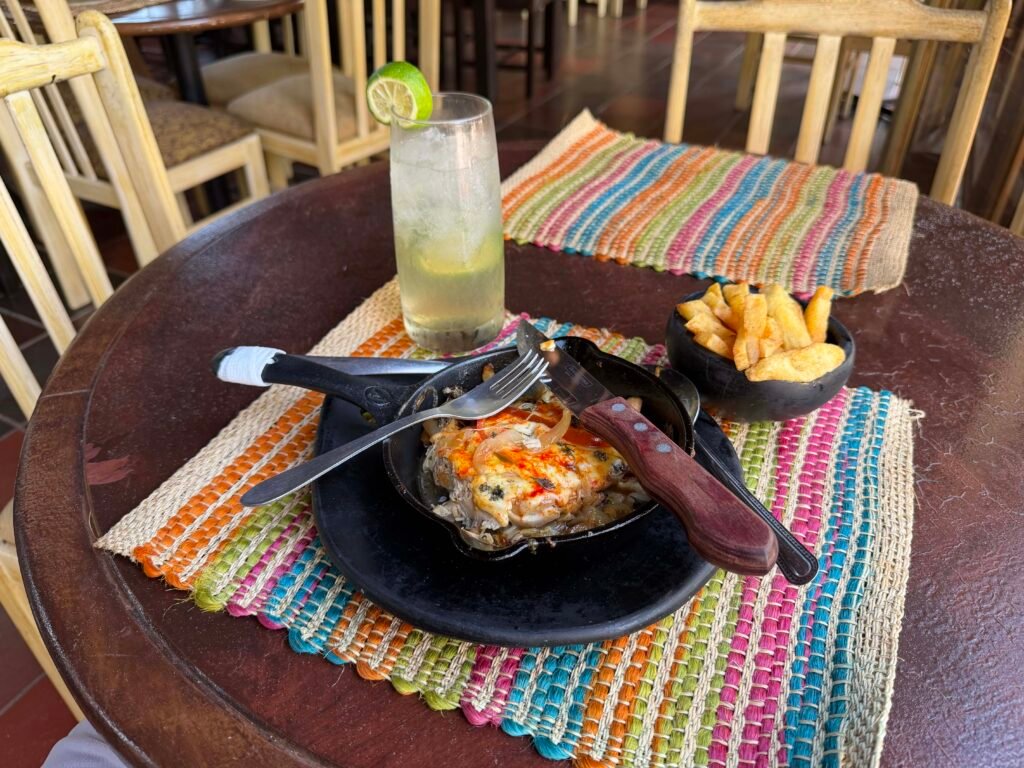
The Local Palate: Stick to the Poultry
The desert restaurants specialize in traditional Huila-style Colombian cuisine. Across multiple locations, I found a consistent pattern that defined my dining strategy:
- The Winner (Chicken): Without fail, the grilled or roasted chicken was the standout. Whether it was pollo asado or a simple chicken breast (pechuga), it was consistently juicy, well-seasoned, and cooked to perfection.
- The Other Meats: While beef and goat (cabrito) are local staples, they can sometimes be a gamble in terms of tenderness and how they are cooked. If you want a guaranteed win after a long day of scouting, stick with the chicken.
The Culinary Heart: Dining at El Shaddai
While I ventured out for my late-night sessions, many of my best meals were right at my daytime base. The food at El Shaddai is a standout feature of the hotel, offering a menu that feels home-cooked yet elevated.
- The Breakfast Fuel: Each morning began with a classic American-style breakfast—perfectly cooked eggs and toast accompanied by a rotating variety of sides like fresh fruit, juices, and local preserves. Having a familiar, hearty breakfast was the perfect way to recover after a grueling 4:00/5:00 AM photoshoot in the canyons.
- Lunch & Dinner Variety: The menu for the later meals was surprisingly diverse. While the chicken remained my personal gold standard, they offered a full range of options including meats, pork, salmon, and even vegetarian dishes for those looking for a lighter meal in the heat.
- The “Post-Shoot” Reward: After a long day of scouting or a morning of editing, there is nothing quite like sitting by one of their private pools with a mojito (or two). The drinks were expertly made and served as the perfect “blue hour” ritual before I prepped my gear for the night.
Between the attentive service from Newton and Rafael and the consistent quality of the kitchen, El Shaddai didn’t just feel like a hotel—it felt like a well-oiled machine designed to keep a photographer fueled and ready for the next “New Moon” window.
My Nightly Routine: Restaurante la Cagüinga
For my late-night shooting schedule, timing was everything. I usually made sure to be back at my nighttime base, Hostal Laberinto Del Cusco, by 6:00 PM to prep my gear. My go-to spot for a pre-shoot meal was Restaurante la Cagüinga.
- Strategic Location: This restaurant is perfectly situated right near the AstroSur Observatory. This proximity is a huge advantage; you can enjoy a hearty dinner and then walk or drive a very short distance to begin your celestial observations. The AstroSur Observatory next door is a location you do not want to miss. They have around 8 telescopes setup (5-6 Newtonians and 2 Tracking scopes), and the staff is very knowledgeable and accommodating. Tours typically run nightly from 7-9pm with Professor Javier providing a grand tour of various constellations, nebulae, planets in Spanish.
- Late-Night Fuel: In a region where many places close early, La Cagüinga is a reliable anchor, staying open until 9:00 PM. This gave me plenty of time to fuel up on a solid dinner and grab extra beverages (the cold Jugos Naturales are a must) before the “witching hour” of the 1:30 AM Milky Way rise.
Between the hospitality at El Shaddai and the reliable, tasty meals at La Cagüinga, I was surprisingly well-fed for a trip that involved so much rugged field work.
6. The Scouting Circuit: Four Essential Tours
To truly capture the soul of Tatacoa, you have to venture beyond the main road. I was lucky to find Jhon Guia as my tour guide for morning tours of the desert. With Jhon Guia leading the way, I spent my daytime hours exploring four distinct environments. These tours were vital for scouting my night shots, but they were also spectacular visual experiences in their own right.
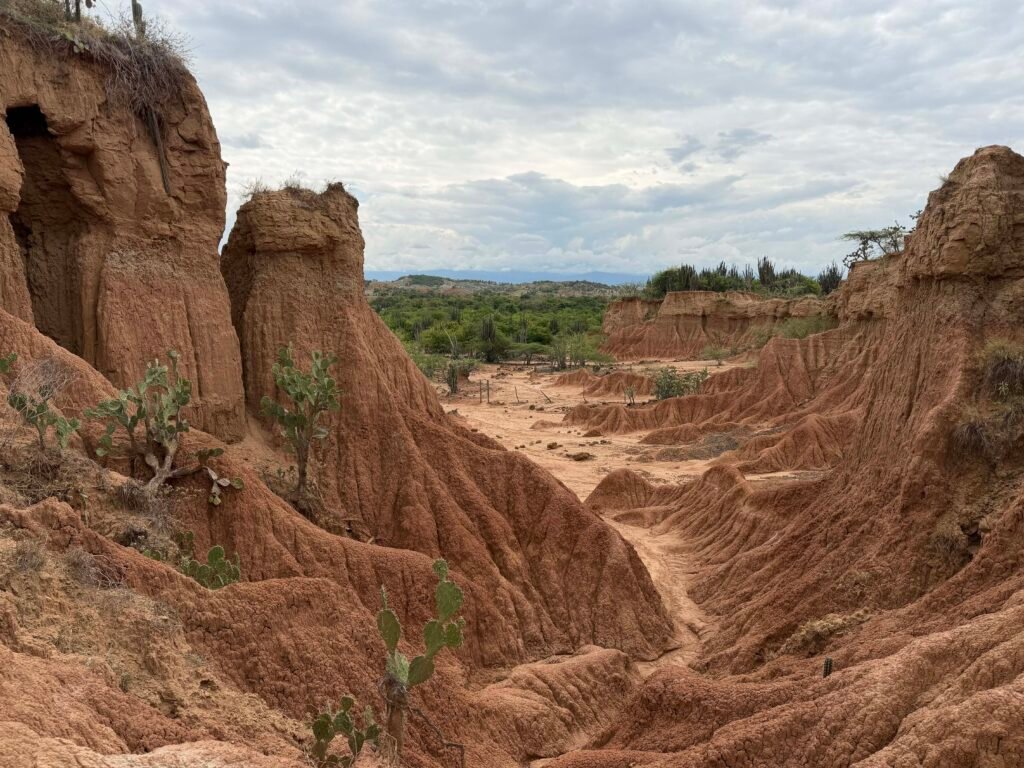
1. The Red Desert (Cuzco Labyrinth)
The most iconic part of Tatacoa. The iron-rich soil has eroded into deep ochre and sienna “labyrinths” that look like a scene from Mars. This is where I found the most dramatic foregrounds for my Milky Way panoramas. The vertical ridges provide a perfect sense of scale against the infinite stars.
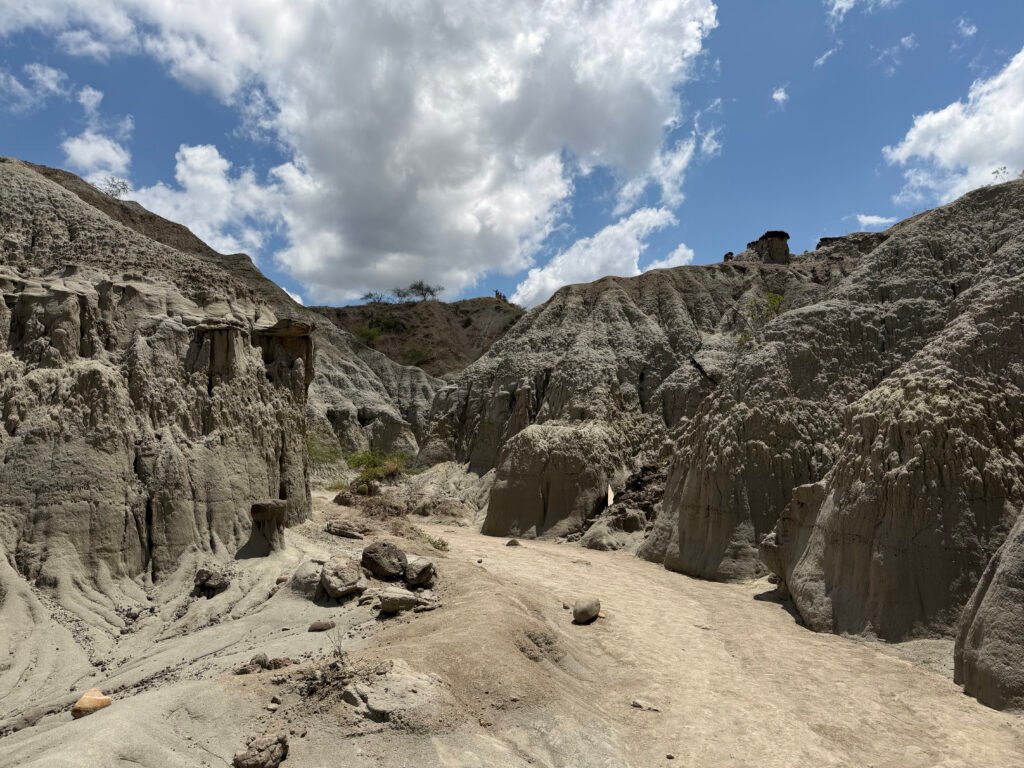
2. The Grey Desert (Los Hoyos)
A complete contrast to Cuzco, the Grey Desert feels haunting and lunar. The formations here are softer, more ghostly, and spread across a vast, open plain. Because it’s further from the town of Villavieja, the light pollution is almost non-existent here. It’s the ultimate “Dark Zone” for deep-space photography. I did not use this location for my shots this time, but will be looking to camp out for my next trip.
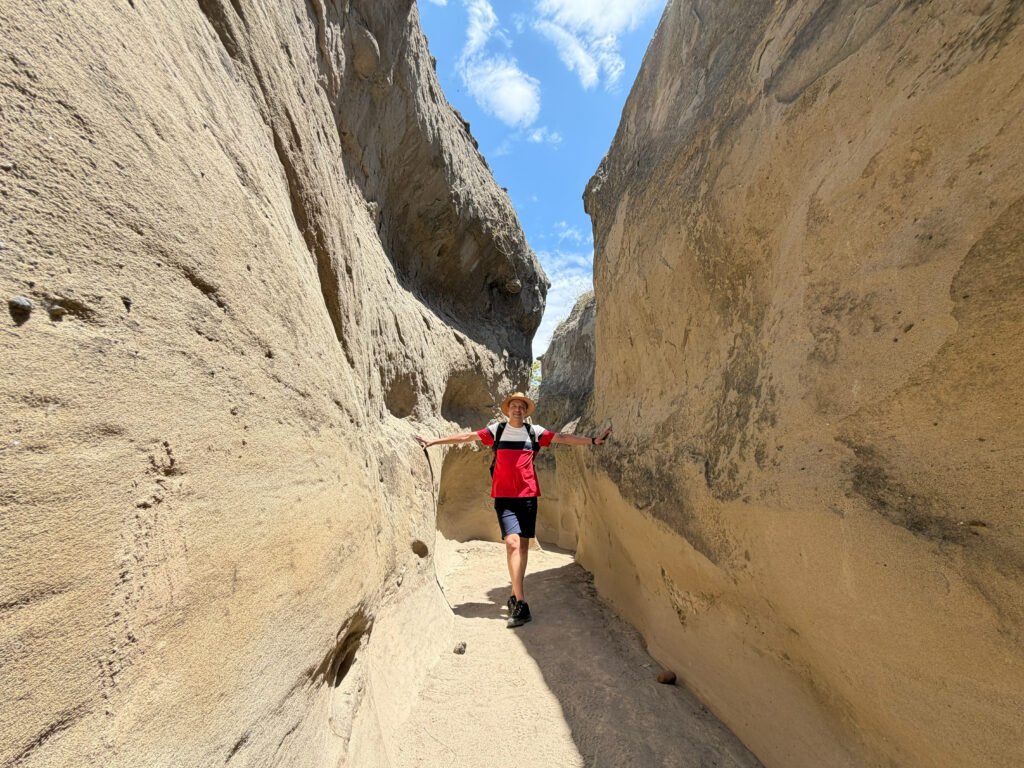
3. The Valley of Xilópalos
This is a hidden gem that many tourists skip. It features “Xilópalos”—petrified wood remains from millions of years ago when this desert was a lush forest. Walking through the narrow “Goat Canyon” (Cañón de la Egipcia) offers incredible textures. The contrast between the ancient fossils and the modern night sky makes for a powerful storytelling image. This too is reserved for my next trip there.
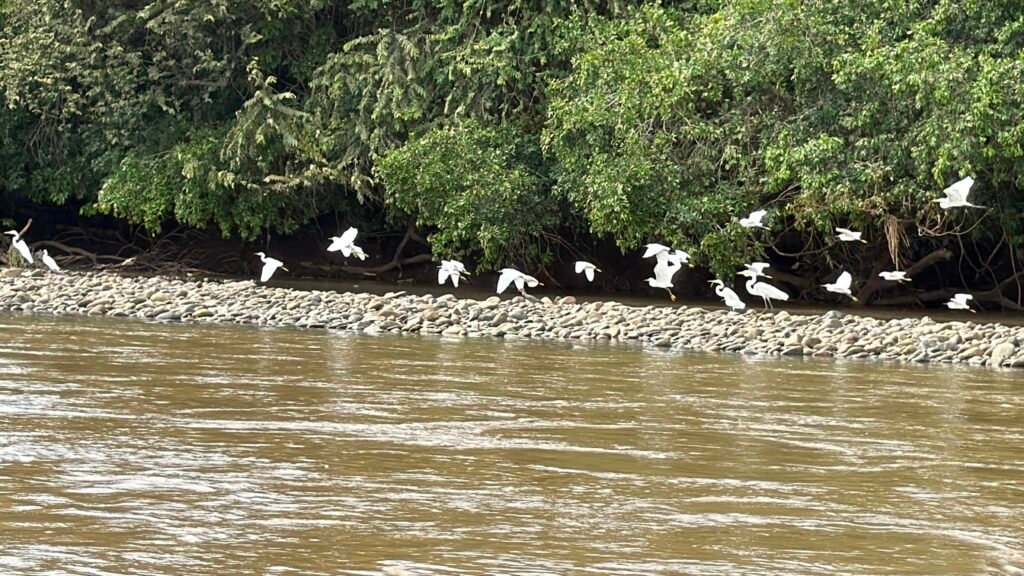
4. The Magdalena River Boat Tour
To see the desert from a different perspective, Jhon took me down to the Magdalena River. Drifting along the water as the sun begins to dip offers a rare moment of coolness and a chance to see the desert’s edge from the water. The reflections of the desert cliffs in the river at Golden Hour are a landscape photographer’s dream. It’s also a great spot to capture some of the local birdlife.
7. The Gear Lab: A Deep Dive into the Expedition Kit
Transporting a mini-observatory across continents is an exercise in engineering and trust. Most equipment in my kit was chosen for its specific role in either high-resolution panoramas, cinematic timelapses, or the precision tracking required for deep-sky work, and some was a based on hope.
1. Camera Bodies & Optics
- The Full-Frame Workhorse: Canon 6D
- Role: My primary camera for high-resolution Milky Way panoramas.
- Why: Even in 2026, the 6D remains a great option for its low-noise performance at high ISOs. Its 20MP sensor captures the subtle nebulosity of the Galactic Core with incredible clarity.
- The Timelapse Specialist: Canon T3i (Rebel 600D)
- Role: Dedicated to capturing long-exposure timelapses.
- Why: While an older APS-C sensor, the T3i is a reliable workhorse. Using it specifically for timelapses allowed me to free up my 6D for stills while still getting great results for video.
- The Glass: Rokinon 14mm f/2.8 (x2)
- Role: Ultra-wide field of view (115.7° on the 6D).
- Why: Known as the “magic bullet” of budget astrophotography, these manual-focus primes are exceptionally sharp even wide open at f/2.8. I used two of them to run both camera rigs simultaneously.
- The Hope: Rokinon 135mm
- Role: I added this lens to my bag at the last minute, hoping to capture a few additional deep sky shots. But with the overload of the Milkyway, I decided to solely focus on arch and decided not to use this lens.
2. Support & Motion Control
- The Foundation: Innorel RT90C Carbon Fiber Tripod
- Spec: 88 lb (40 kg) load capacity.
- Why: This thing is a tank. The 40mm leg tubes provide the absolute rigidity needed for the ZWO AM5 mount, ensuring that even a desert breeze won’t introduce vibrations into a 3-minute exposure.
- The Navigator: ZWO AM5 Harmonic Drive Mount
- Role: Precision star tracking for deep-space detail.
- Why: The intent was to use this for tracked panorama shots, but I soon realized that this complicated my setup way too much, so decided not to use the mount.
- The Cinematic Motion: Syrp Magic Carpet & Motion Control
- Role: Adding linear movement to timelapses.
- Why: I laid the Syrp Magic Carpet short track across the roof of my SUV for a superior vantage point. Coupled with the Syrp Genie motion control devices, it added that “buttery smooth” cinematic slide that makes the desert look like a big-budget film set.
3. Power & Protection
- The Lifeblood: Talentcell 12V Lithium-ion Batteries
- Role: Powering the Canon cameras, Syrp devices, and dew heaters.
- Why: Compact and reliable. These batteries kept my setup running for 6+ hours straight. (Tip: Bring a compatible wall charger or a solar changer to juice them up during daytime).
- The Vault: Pelican 1615 Air & 1510 Cases
- Pelican 1615 Air: Housed the heavy tripods, Syrp tracks, and Neewer ballheads. It’s the maximum airline check-in size but remains lightweight.
- Pelican 1510: Protected the sensitive ZWO AM5 and Syrp motion units. This was a smaller but excellent option for travel—crushproof, dustproof, and still manageable to travel with.
- The Carry-On: Travelpro + Vanguard 46
- Role: Stealth transport for optics.
- Why: I nested my Vanguard 46 padded case inside a Travelpro roller. This kept my cameras and glass safe and discrete during travel, while the Vanguard insert acted as a grab-and-go bag once I reached the desert.
Closing Thoughts
Tatacoa is a place where time feels suspended between the prehistoric fossils at your feet and the ancient starlight overhead. Having the right gear—and the right people at El Shaddai and Laberinto Del Cusco to support the mission—turned a challenging expedition into a successful gallery of images.
Quite a stunning and successful adventure you have undertaken. I will look forward to sharing your results from several more in the future!